
Robotic Fundoplication: A Comprehensive Guide
Robotic Fundoplication is a minimally invasive surgical procedure used to treat gastroesophageal reflux disease (GERD) and other related conditions. This p
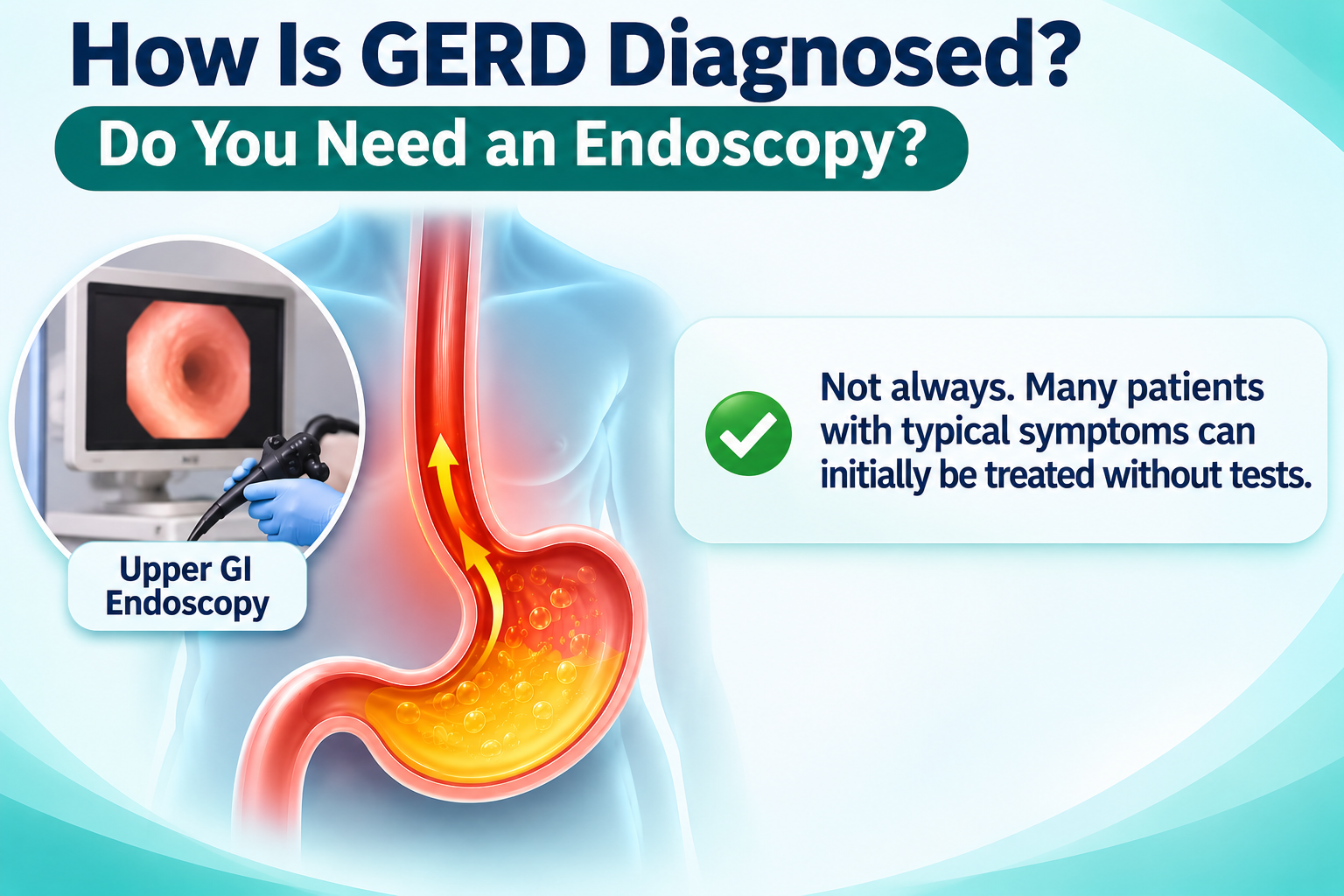
Gastroesophageal Reflux Disease (GERD) occurs when stomach contents repeatedly flow backward into the food pipe (esophagus), causing troublesome symptoms or complications.
Does Every Patient with GERD Need Tests?
No. If you experience typical symptoms such as heartburn and sour regurgitation, your doctor may initially recommend lifestyle changes and a trial of acid-reducing medication without performing investigations.
However, further testing may be needed if symptoms persist, warning signs are present, the diagnosis is uncertain, or anti-reflux surgery is being considered.
1. Upper GI Endoscopy
An upper gastrointestinal endoscopy is a procedure in which a thin, flexible camera is passed through the mouth to examine the food pipe, stomach and beginning of the small intestine.
What Can Endoscopy Detect?
Is Endoscopy Painful?
Endoscopy is usually performed with throat-numbing medication and/or sedation, depending on the patient's condition and the facility. Most patients tolerate the procedure well.
Important: A normal endoscopy does not rule out GERD. Many patients with reflux symptoms have no visible damage to the esophagus.
2. When Is Endoscopy Recommended?
Your doctor may advise an endoscopy if you have:
Endoscopy is also commonly included in the evaluation before anti-reflux surgery.
Remember: The purpose of testing is not simply to confirm acidity. It is to identify the cause of symptoms, detect complications and guide the most appropriate treatment.
When symptoms continue despite appropriate medication, or when anti-reflux surgery is being considered, your doctor may recommend specialized tests to understand how the food pipe is functioning.
1. 24-Hour Esophageal pH Monitoring
This test measures how much acid enters your food pipe over a period of time.
A thin tube containing a sensor may be placed through the nose into the esophagus. Alternatively, a small wireless pH capsule may be attached to the esophagus during endoscopy.
Why Is This Test Important?
Depending on the method, monitoring may continue for 24 hours or longer.
2. Esophageal pH-Impedance Monitoring
This investigation measures acid exposure and detects movement of liquid or gas within the food pipe.
It can identify both acidic and non-acidic reflux episodes.
When Is It Useful?
It may be recommended when symptoms continue despite medication or when the relationship between reflux and symptoms is uncertain.
Your doctor will decide whether testing should be performed while taking or temporarily stopping acid-suppressing medication.
3. Esophageal Manometry
Esophageal manometry measures the pressure and coordination of muscles in the food pipe.
A thin catheter is passed through the nose into the esophagus. You will be asked to swallow small amounts of water while pressure measurements are recorded.
What Does Manometry Tell Us?
Important: Manometry does not diagnose GERD by itself. It is particularly useful before anti-reflux surgery to assess esophageal motility.
4. Barium Swallow Examination
A barium swallow is an X-ray examination performed after drinking a special contrast liquid.
It may help identify:
A barium swallow alone is not a reliable test to confirm GERD.
5. What Tests Are Needed Before GERD Surgery?
Before laparoscopic or robotic fundoplication, your surgeon will usually recommend a detailed evaluation.
This commonly includes:
Why Is Proper Testing Important Before Surgery?
Not every patient with heartburn has GERD. Conditions such as functional heartburn, reflux hypersensitivity and esophageal motility disorders may produce similar symptoms.
Surgery is most appropriate when GERD is objectively established and the patient's symptoms and investigations support the procedure.
GERD Evaluation in Bhopal
Dr. Vishu Jain, Consultant Robotic, Laparoscopic, GI & HPB Surgeon, provides individualized assessment of patients with persistent acid reflux and hiatal hernia.
The choice of investigations depends on symptoms, previous treatment, endoscopy findings and whether surgery is being considered.
Remember: Not every patient needs every test. The goal is to select the right investigation for the right patient and avoid unnecessary procedures.
FAQ
No. Patients with typical heartburn and regurgitation without warning signs may initially receive treatment without endoscopy. Endoscopy is recommended in selected patients, particularly when warning signs, persistent symptoms or suspected complications are present.
Yes. Many patients with GERD have a normal-looking esophagus during endoscopy. Ambulatory reflux monitoring can help establish the diagnosis when needed.
Ambulatory esophageal reflux monitoring is an important objective test for measuring abnormal acid exposure. The most appropriate test depends on whether GERD has already been established and the patient's clinical situation.
Manometry may cause temporary discomfort or a gagging sensation while the catheter is inserted. Most patients tolerate the test, which usually takes around 20–30 minutes.
Manometry helps assess esophageal muscle function and exclude major swallowing disorders, including achalasia. These findings are important when planning anti-reflux surgery.
No. There is no routine blood test that confirms GERD. Diagnosis is based on symptoms, clinical evaluation and appropriate investigations when required.
Sometimes. Reflux monitoring may be performed either on or off acid-suppressing medicines, depending on the clinical question. Follow the testing specialist's instructions rather than stopping medication yourself.
Learn about GERD symptoms, including heartburn, acid reflux, chest discomfort and swallowing problems. Know when to consult Dr. Vishu Jain in Bhopal.
Read moreDiscover Dr. Vishu Jain's approach to GERD treatment in Bhopal, from diagnosis and medicines to laparoscopic and robotic anti-reflux surgery.
Read moreExplore GERD treatment options in Bhopal, including medicines, lifestyle changes, laparoscopic fundoplication and robotic anti-reflux surgery.
Read moreVisit us
Main Rd No. 3, near Personal Branch SBI, E-3, Arera Colony, Bhopal, Madhya Pradesh 462016
Mon–Sat: 9:00 am – 8:00 pm
Find us
Main Rd No. 3, near Personal Branch SBI, E-3, Arera Colony, Bhopal, Madhya Pradesh 462016