
Decoding Gastrointestinal Symptoms: When to Consult a Specialist
Navigating through the complexities of gastrointestinal health can be challenging. Understanding when to seek specialized care is crucial for maintaining y
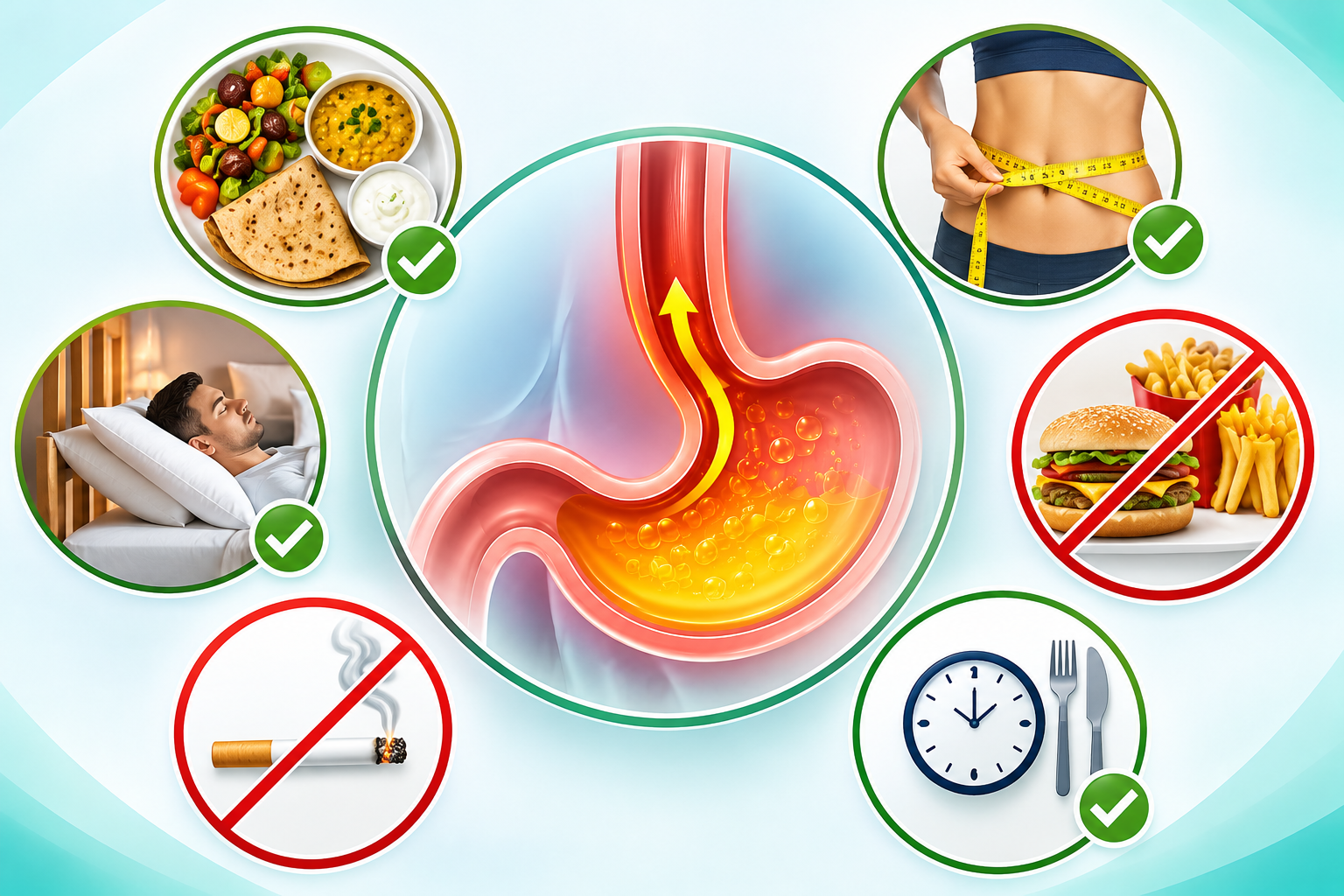
Gastroesophageal Reflux Disease (GERD), commonly called acid reflux, occurs when stomach contents repeatedly flow backward into the food pipe (esophagus), causing troublesome symptoms or complications.
The good news is that most patients with GERD can be treated without surgery. Treatment depends on the severity of symptoms, response to medicines, associated conditions and individual preferences.
1. Lifestyle and Dietary Changes
Simple lifestyle changes can significantly improve reflux symptoms in many patients.
Maintain a Healthy Weight
If you are overweight, losing excess weight may help reduce pressure on the stomach and improve reflux.
Avoid Lying Down After Meals
Try to finish dinner at least 2–3 hours before bedtime. Avoid lying flat immediately after eating.
Eat Smaller Meals
Large meals can increase stomach distension and worsen reflux. Smaller, appropriately spaced meals may be better tolerated.
Identify Trigger Foods
Some patients experience worsening symptoms after fatty foods, spicy meals, coffee, chocolate or carbonated drinks.
Not every food triggers reflux in every patient. Avoid foods that consistently worsen your own symptoms rather than unnecessarily restricting your diet.
Elevate the Head End of Your Bed
If you experience nighttime reflux, raising the head end of the bed or using a suitable wedge pillow may help.
Stop Smoking
Smoking cessation benefits digestive health and overall well-being.
2. Medicines Used to Treat GERD
Antacids
Antacids neutralize stomach acid and provide temporary relief from occasional heartburn. They do not correct the underlying reflux mechanism.
Proton Pump Inhibitors (PPIs)
PPIs are the main medicines used to treat GERD. Common examples include pantoprazole, omeprazole, esomeprazole and rabeprazole.
These medicines reduce acid production, improve symptoms and help heal reflux-related inflammation of the food pipe.
For patients with typical GERD symptoms and no warning signs, an initial treatment course of approximately eight weeks is commonly recommended.
H2 Receptor Blockers
Medicines such as famotidine may be useful for selected patients with mild or intermittent symptoms.
3. Do GERD Medicines Need to Be Taken Lifelong?
Not necessarily.
Some patients require only a short course of treatment. Others may need longer-term medication, especially if they have severe erosive esophagitis or certain reflux-related complications.
The aim is to use an appropriate effective regimen while periodically reviewing the need for continued treatment.
4. What If GERD Does Not Improve with Medicines?
Persistent symptoms do not automatically mean surgery is required.
Your doctor may first assess:
Remember: Most patients with GERD do not need an operation. Surgery is considered only when the diagnosis and clinical circumstances support it.
Although most patients with GERD can be managed with lifestyle changes and medications, some patients may benefit from anti-reflux surgery.
1. When Should GERD Surgery Be Considered?
Surgery may be appropriate for selected patients with objectively confirmed GERD, particularly when:
Important: Persistent acidity despite medication does not automatically mean surgery is required. The diagnosis should be carefully evaluated before recommending an operation.
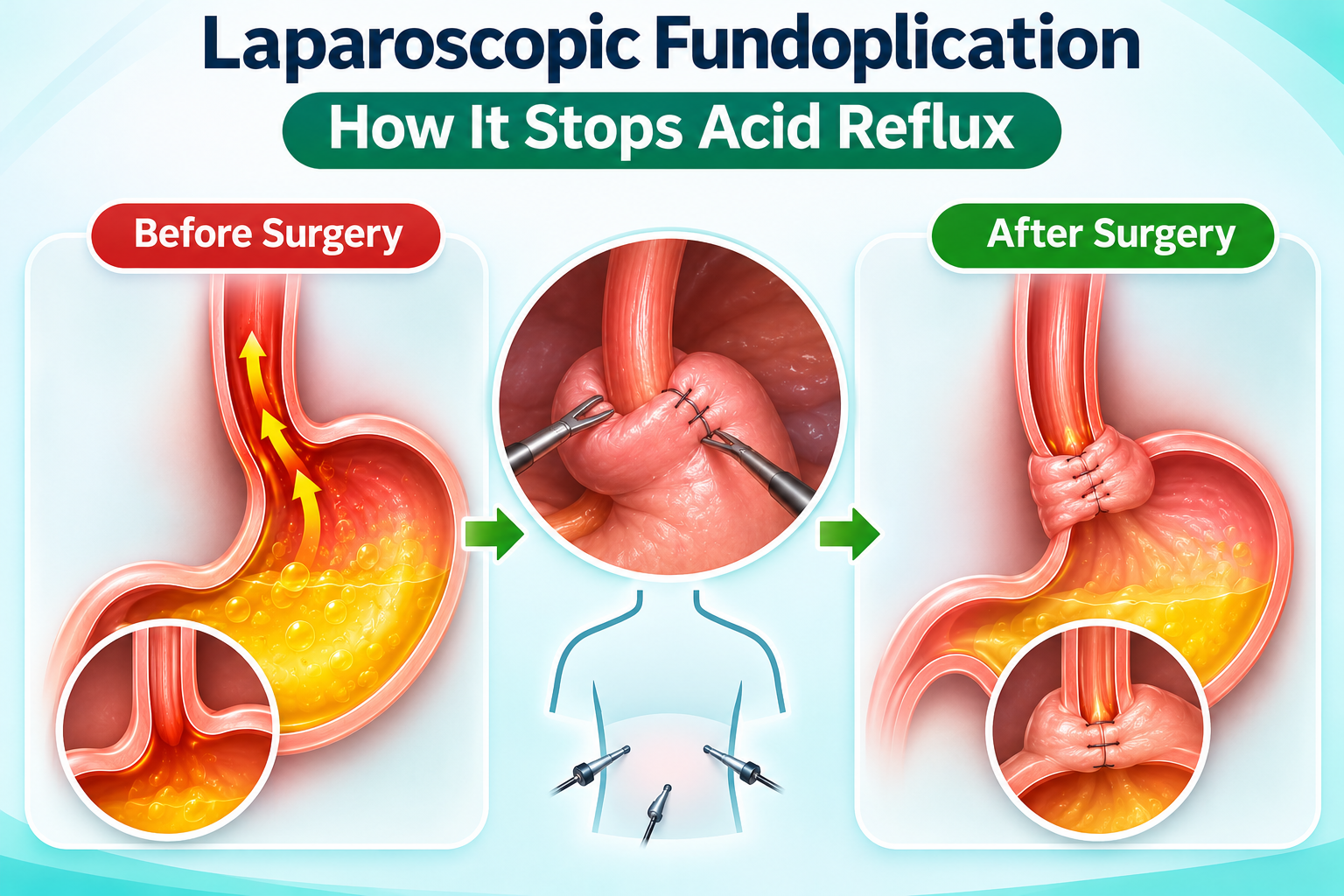
2. What Is Laparoscopic Fundoplication?
Laparoscopic fundoplication is an established minimally invasive operation for treating GERD.
The procedure aims to strengthen the natural barrier between the stomach and the food pipe.
During surgery:
3. Types of Fundoplication
Nissen Fundoplication (360-Degree Wrap)
The upper stomach is wrapped completely around the lower esophagus to create an anti-reflux barrier.
Toupet Fundoplication (270-Degree Wrap)
A partial posterior wrap is created around the lower esophagus.
Dor Fundoplication (Approximately 180-Degree Wrap)
A partial anterior wrap is created in selected circumstances.
The choice of procedure depends on the patient's anatomy, esophageal motility, symptoms and surgical assessment.
4. Can GERD Surgery Be Performed Robotically?
Yes. Robotic-assisted fundoplication is another minimally invasive approach that may be suitable for selected patients.
Robotic systems provide three-dimensional visualization and articulated instruments that can assist the surgeon during dissection and suturing.
However, robotic surgery is not automatically superior to conventional laparoscopic surgery for every patient. The most appropriate technique depends on individual circumstances.
5. What Are the Benefits of Anti-Reflux Surgery?
In appropriately selected patients, potential benefits include:
Can GERD Be Permanently Cured by Surgery?
Many patients experience long-lasting symptom improvement, but surgery does not guarantee that reflux will never return.
Some patients may require medicines again in the future.
6. What Are the Possible Risks of Fundoplication?
Like any operation, anti-reflux surgery has potential risks.
These include:
These risks should be discussed before deciding on surgery.
7. Recovery After Laparoscopic GERD Surgery
Hospital Stay
Many patients undergoing uncomplicated laparoscopic fundoplication can return home within one or two days.
Diet After Surgery
Patients generally begin with liquids and gradually progress to soft foods before returning to a more regular diet.
The exact diet plan depends on the operation and individual recovery.
Return to Daily Activities
Light activities can often be resumed within a few days. Return to work and strenuous exercise depends on recovery and the surgeon's recommendations.
8. What Tests Are Needed Before GERD Surgery?
A careful preoperative assessment is essential.
This commonly includes:
These tests help confirm the diagnosis and determine whether anti-reflux surgery is appropriate.
9. GERD Treatment with Dr. Vishu Jain in Bhopal
Dr. Vishu Jain is a Consultant Robotic, Laparoscopic, GI & HPB Surgeon with specialized training in Surgical Gastroenterology from AIIMS Jodhpur.
His approach to GERD treatment emphasizes:
Not every patient with GERD needs surgery. The best treatment is the one most appropriate for the patient's condition, symptoms and preferences.
Where Precision Meets Compassion
FAQ
GERD can often be controlled with lifestyle changes and medicines. Some patients achieve prolonged symptom relief, while others require ongoing treatment. No approach guarantees permanent relief for everyone.
Proton pump inhibitors (PPIs), such as pantoprazole and esomeprazole, are commonly used because they effectively reduce stomach acid and help heal reflux-related inflammation. The choice and duration depend on individual circumstances.
Surgery may be considered when GERD is objectively confirmed and symptoms remain troublesome, when a significant hiatal hernia is present, or when a suitable patient prefers surgery after discussing alternatives and risks.
Nissen fundoplication uses a complete 360-degree wrap around the lower esophagus, while Toupet fundoplication uses a partial 270-degree posterior wrap. The choice depends on the patient's clinical assessment and esophageal function.
Laparoscopic fundoplication is an established operation with good outcomes in appropriately selected patients. However, risks include swallowing difficulty, bloating, injury to nearby structures and recurrent reflux.
Some patients can stop or reduce acid-suppressing medicines after surgery, while others may need them again. Results vary according to the underlying condition and long-term response.
Many patients return to light activities within a few days and desk-based work within approximately one to two weeks. Diet is advanced gradually, and strenuous activities may need to be restricted for several weeks.
Yes. When indicated, a hiatal hernia is usually repaired during anti-reflux surgery. The exact operation depends on the size and type of hernia, esophageal function and the patient's overall condition.
Learn about GERD symptoms, including heartburn, acid reflux, chest discomfort and swallowing problems. Know when to consult Dr. Vishu Jain in Bhopal.
Read moreLearn how GERD is diagnosed with endoscopy, 24-hour pH monitoring and esophageal manometry. Understand when reflux tests are needed in Bhopal.
Read moreDiscover Dr. Vishu Jain's approach to GERD treatment in Bhopal, from diagnosis and medicines to laparoscopic and robotic anti-reflux surgery.
Read moreVisit us
Main Rd No. 3, near Personal Branch SBI, E-3, Arera Colony, Bhopal, Madhya Pradesh 462016
Mon–Sat: 9:00 am – 8:00 pm
Find us
Main Rd No. 3, near Personal Branch SBI, E-3, Arera Colony, Bhopal, Madhya Pradesh 462016