
Back to ResourcesGastrointestinal (Gi) Surgery
What Is Laparoscopic Appendicectomy?
Health education · AI-assisted
Dr. Vishu Jain•October 25, 2026•0 views
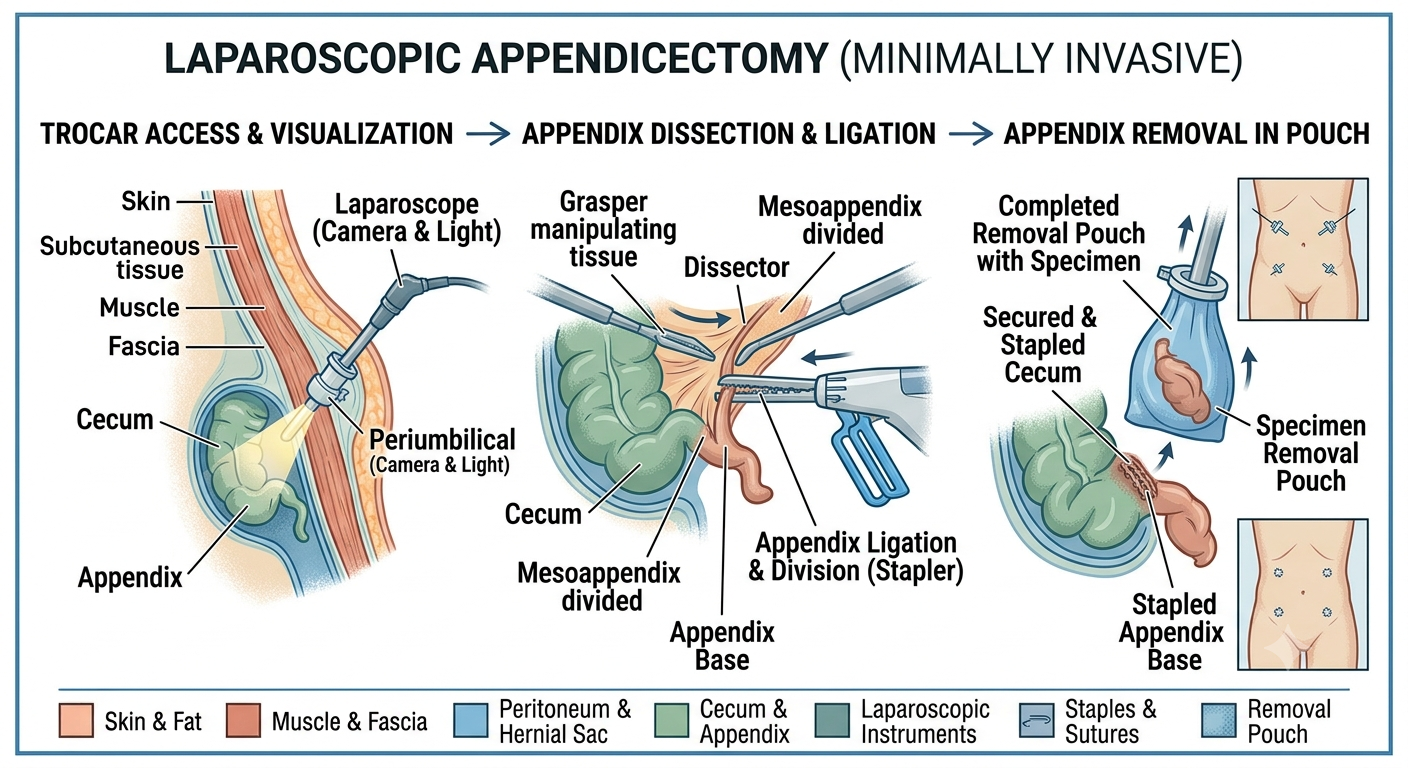
Laparoscopic Appendicectomy: A Guide for Patients### Introduction
Laparoscopic appendicectomy is a minimally invasive surgical procedure used to remove an inflamed appendix, commonly known as appendicitis. This page aims to provide a comprehensive understanding of the procedure, its benefits, and what patients can expect before, during, and after the surgery.
Laparoscopic appendicectomy involves the removal of the appendix using small incisions and a camera, known as a laparoscope. This technique allows surgeons to perform the operation with precision while minimizing recovery time and discomfort for the patient.
Why Is It Used?
This procedure is primarily used to treat appendicitis, a condition where the appendix becomes inflamed and filled with pus. If left untreated, it can lead to severe complications such as a ruptured appendix. Laparoscopic appendicectomy is preferred for its quicker recovery and reduced postoperative pain compared to open surgery.
When Is It Recommended?
Laparoscopic appendicectomy is recommended when a patient presents symptoms of appendicitis, such as abdominal pain, fever, and nausea. A diagnosis is typically confirmed through physical examination and imaging tests like an ultrasound or CT scan.
When Is It Not Appropriate?
In certain cases, such as when the appendix has ruptured or there is severe infection, an open appendicectomy may be more appropriate. The surgeon will evaluate the patient's condition to determine the best approach.
How Does It Work?
During the procedure, the surgeon makes a few small incisions in the abdomen. A laparoscope is inserted through one of the incisions, providing a magnified view of the internal organs. The appendix is then removed through one of the incisions using specialized instruments.
What Happens During the Surgery?
The surgery is performed under general anesthesia. The patient is positioned on the operating table, and the surgeon makes small incisions to access the appendix. The procedure typically takes about an hour, and the patient is monitored closely throughout.
Preparation
Prior to the surgery, patients are advised to avoid eating or drinking for several hours. The healthcare team will provide specific instructions regarding medications and other preparations to ensure a safe procedure.
Risks & Complications
As with any surgery, there are risks involved, including bleeding, infection, and adverse reactions to anesthesia. However, laparoscopic appendicectomy generally has a lower risk of complications compared to open surgery.
What to Expect After Surgery
Patients can expect some discomfort and swelling around the incision sites, which usually subsides within a few days. Most patients are able to return to normal activities within a week, although strenuous activities should be avoided for a longer period.
Outcomes
Laparoscopic appendicectomy is highly effective in treating appendicitis, with most patients experiencing relief from symptoms shortly after the procedure. The minimally invasive nature of the surgery also contributes to a faster recovery.
Alternatives
In some cases, antibiotics alone may be considered as an initial treatment for appendicitis. However, surgery remains the definitive treatment to prevent recurrence and complications.
About Dr. Vishu Jain
Dr. Vishu Jain is a Consultant specializing in GI, HPB, Laparoscopic, and Liver transplant surgery with over 10 years of experience. His expertise in minimally invasive and robotic surgery ensures optimal patient outcomes.
Consultation and Next Steps
If you suspect appendicitis or have been advised to undergo an appendicectomy, consult with a specialist to discuss your options and the best course of action.
1. How long does recovery take after laparoscopic appendicectomy?
Recovery typically takes about one to two weeks, with most patients resuming normal activities within a week.
2. Is the procedure painful?
Patients may experience some discomfort post-surgery, but it is generally less painful than open surgery.
3. Can appendicitis recur after surgery?
Once the appendix is removed, appendicitis cannot recur.
4. Are there dietary restrictions after the surgery?
Patients are usually advised to start with a light diet and gradually return to their regular diet as tolerated.
5. What are the signs of complications to watch for?
Signs of complications include persistent fever, severe abdominal pain, or unusual swelling at the incision sites. Contact your doctor if you experience these symptoms.
More health resources
Read more articles from Dr. Vishu Jain.
Read relevant articles