
GERD (Acid Reflux)
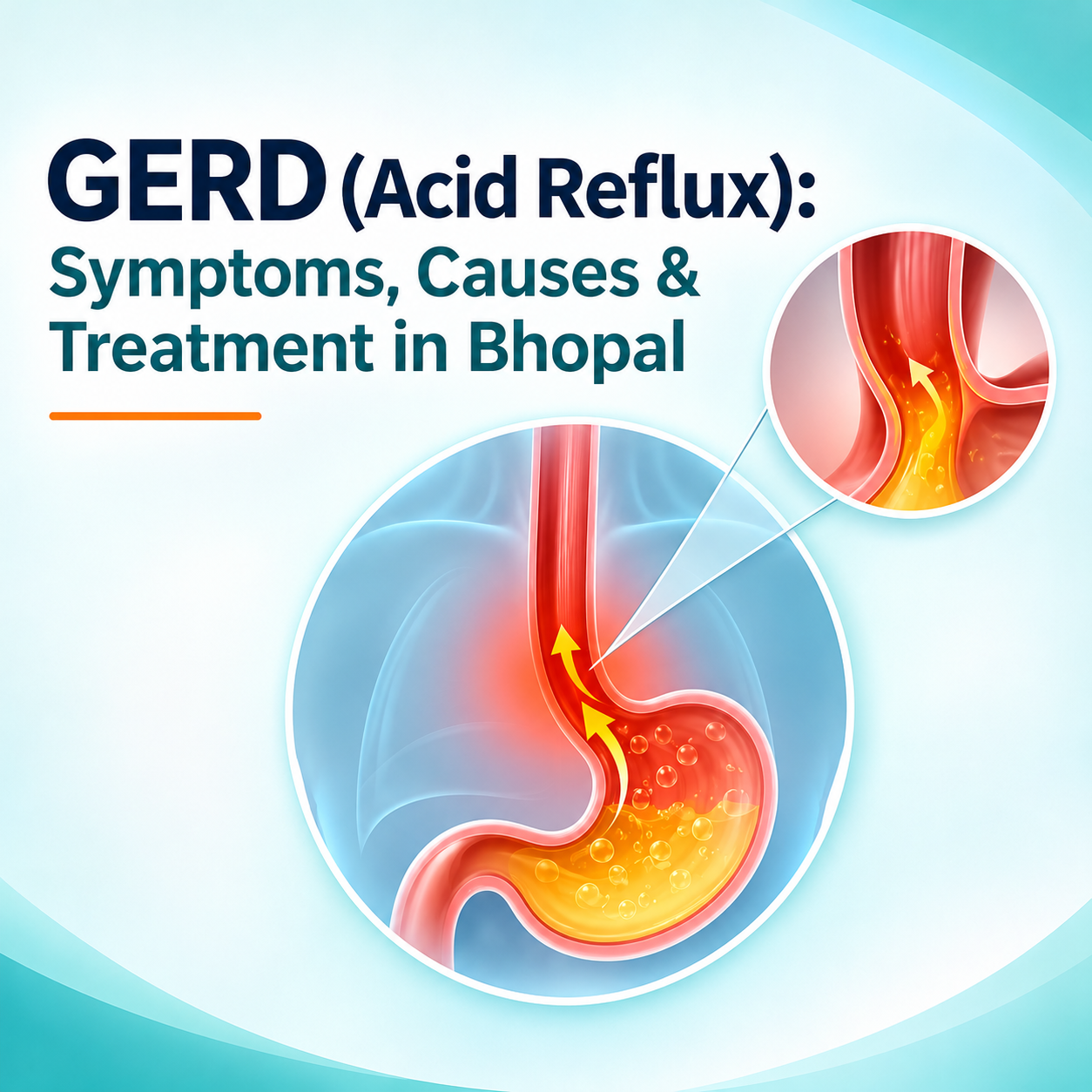
GERD (Acid Reflux): Symptoms, Causes & Treatment in Bhopal
Understanding frequent acidity, heartburn and acid reflux — and knowing when to seek medical help.
Do you frequently experience burning in your chest after meals? Does sour or bitter liquid sometimes come back into your mouth? Do you feel uncomfortable when lying down after eating?
These symptoms may be caused by Gastroesophageal Reflux Disease (GERD), commonly known as acid reflux.
Occasional acidity is common. However, when acid reflux occurs repeatedly, interferes with daily activities or causes complications, it may require medical evaluation.
The good news is that GERD can often be controlled with lifestyle changes and appropriate medications. For selected patients, minimally invasive anti-reflux surgery may provide effective long-term symptom relief.
In this guide, Dr. Vishu Jain, Consultant Robotic, Laparoscopic, GI & HPB Surgeon in Bhopal, explains GERD in simple language, including its causes, symptoms, diagnosis and treatment options.
1. What Is GERD? Is It Different from Normal Acidity?
GERD stands for Gastroesophageal Reflux Disease.
Normally, food travels from your mouth through a tube called the esophagus (food pipe) into your stomach. The stomach produces acid to help digest food.
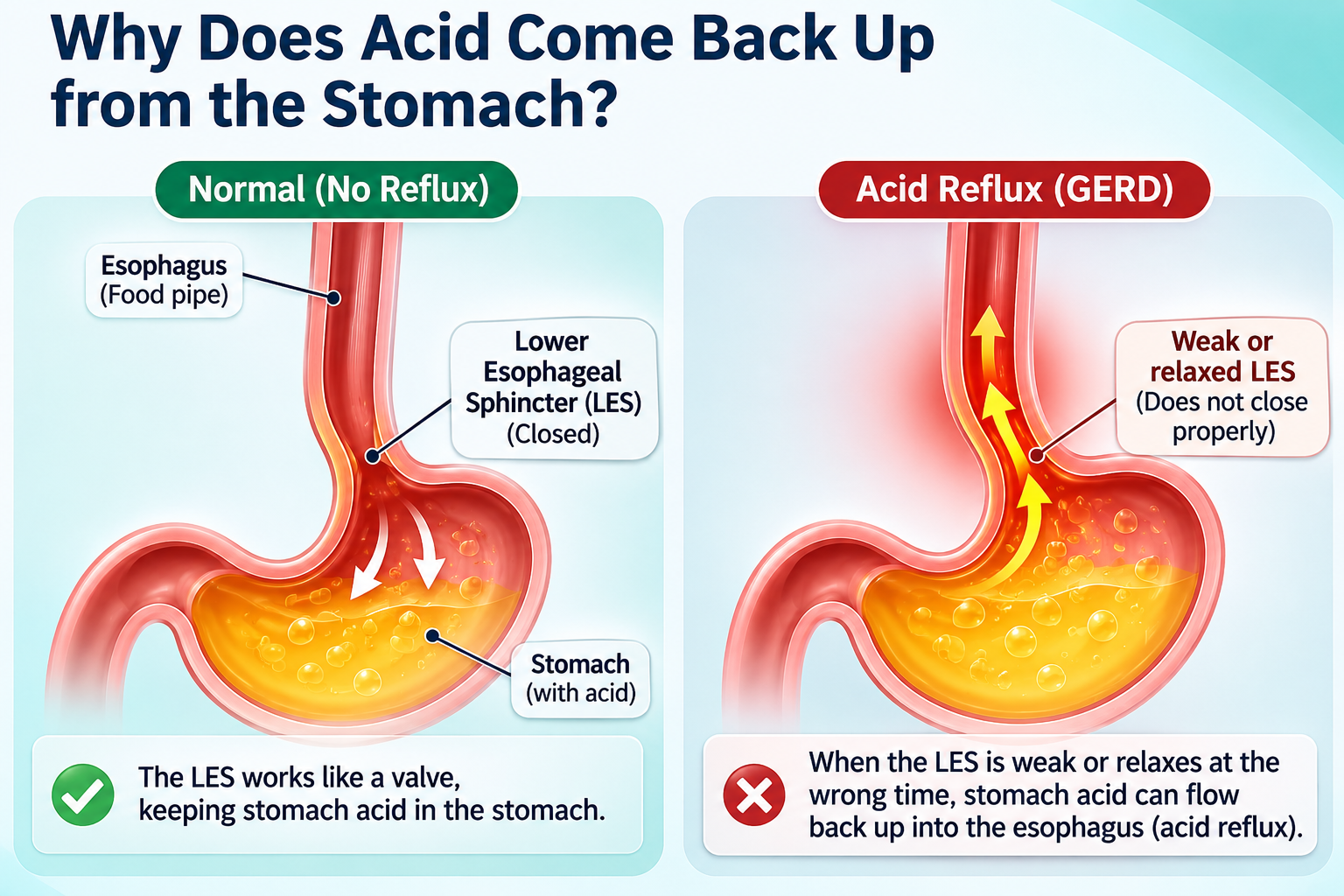
A ring-shaped muscle at the lower end of the food pipe, called the Lower Esophageal Sphincter (LES), acts like a valve. It helps prevent stomach contents from flowing backward.
When this valve does not work properly, stomach contents can flow back into the food pipe. This is called acid reflux.
If reflux repeatedly causes troublesome symptoms or damages the food pipe, the condition is called GERD.
Is occasional acidity the same as GERD?
Not necessarily.
- Occasional acidity: You may experience heartburn after a heavy meal or eating late at night.
- GERD: Reflux occurs repeatedly, causes troublesome symptoms or leads to complications.
For example, having heartburn after an unusually heavy meal does not automatically mean you have GERD. However, if you experience heartburn several times a week, need frequent acidity medicines or have symptoms that disturb your sleep, you should consider medical evaluation.
Remember: Frequent acidity should not always be dismissed as a minor digestive problem.
2. Why Does Acid Come Back Up from the Stomach?
Your stomach has a natural protective lining that can tolerate acid. Your food pipe does not have the same level of protection.
Normally, the lower esophageal sphincter opens when you swallow food and closes afterward.
In GERD, this valve may relax at inappropriate times or fail to prevent stomach contents from moving upward.
As a result, acid and sometimes food can flow backward into the esophagus, causing irritation.
What happens during acid reflux?
- Food enters the stomach through the esophagus.
- The stomach produces acid to digest food.
- The valve between the stomach and food pipe does not prevent reflux effectively.
- Acidic stomach contents move upward into the esophagus.
- The patient experiences heartburn, regurgitation or other symptoms.
Repeated exposure to stomach acid may cause inflammation of the food pipe, known as reflux esophagitis.
3. What Are the Common Symptoms of GERD?
GERD can produce different symptoms in different patients.
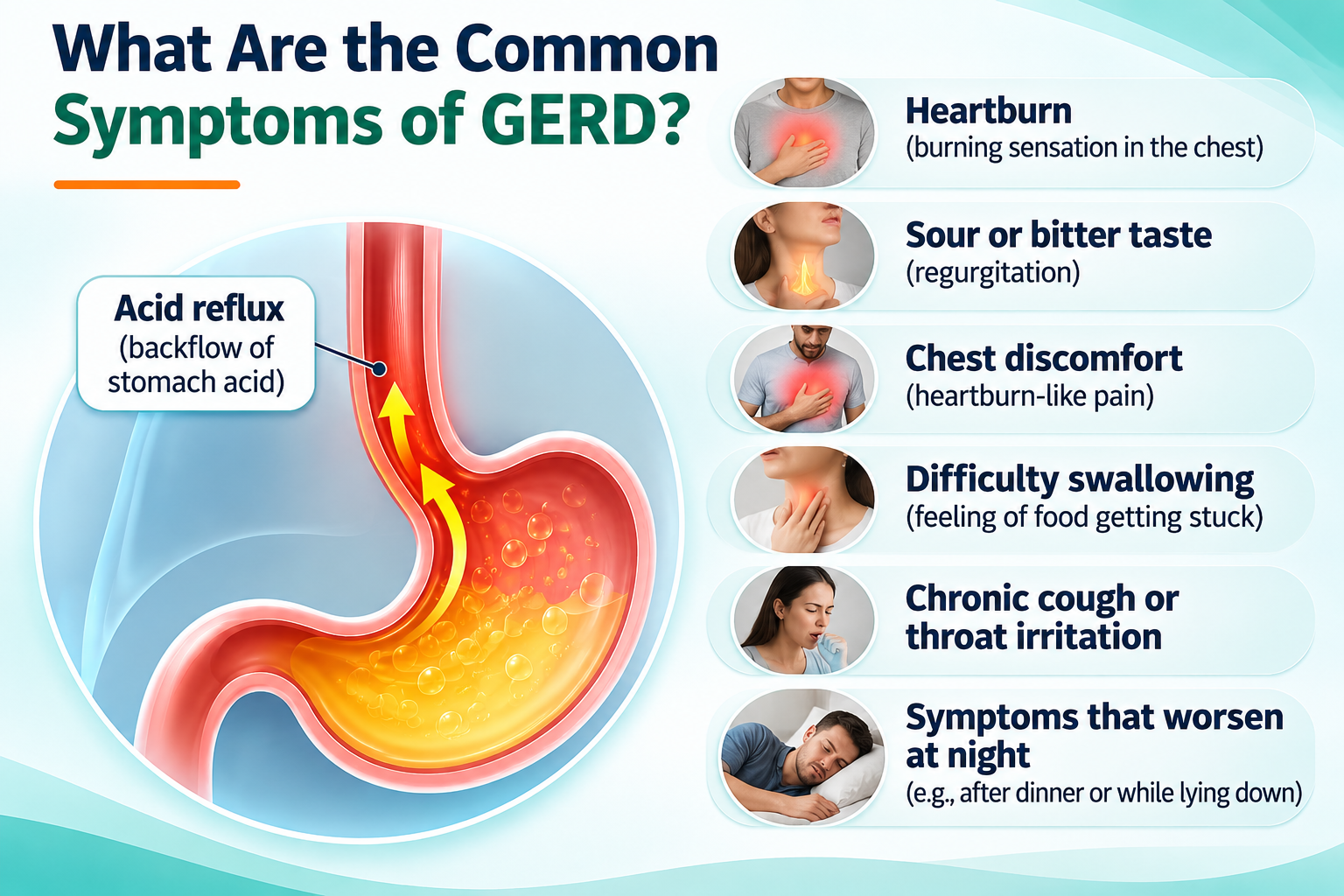
Burning sensation in the chest (Heartburn) - This is one of the most common symptoms. You may experience a burning feeling behind the breastbone, particularly after meals or when lying down.
Sour or bitter liquid coming into the mouth (Regurgitation) - Some patients experience the sensation of stomach contents coming back into the throat or mouth. This may leave a sour or bitter taste.
Chest discomfort - GERD can sometimes cause chest discomfort that resembles heart-related pain.
Important: New, severe or unexplained chest pain should never automatically be attributed to acidity. Seek urgent medical attention, particularly if it occurs with sweating, breathlessness, dizziness or pain spreading to the arm or jaw.
Chronic cough or throat irritation - Some patients with reflux experience persistent coughing, hoarseness or throat irritation. However, these symptoms can have many causes and should not automatically be attributed to GERD.
Difficulty swallowing - You may feel that food is getting stuck while swallowing. This can occur due to inflammation, narrowing of the esophagus or other conditions. Difficulty swallowing requires medical evaluation.
Symptoms that worsen at night
Reflux may become more noticeable when lying flat, especially after a late dinner. Some patients wake up with a sour taste, coughing or burning in the chest.
4. What Causes GERD? Who Is More Likely to Develop It?
GERD usually develops because of a combination of factors.
Common contributing factors
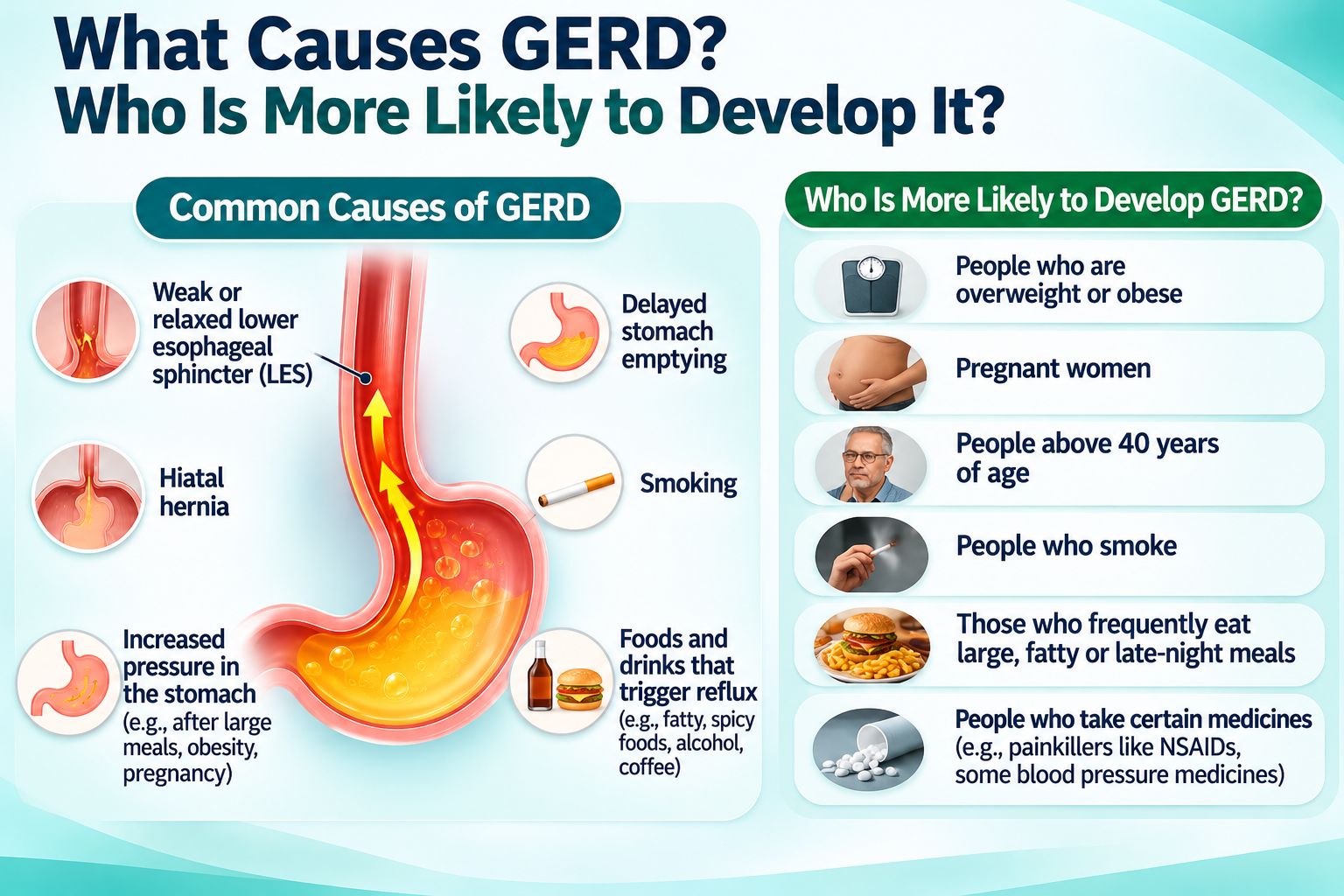
Excess body weight - Extra abdominal weight can increase pressure on the stomach and contribute to reflux.
Hiatal hernia - A hiatal hernia occurs when part of the stomach moves upward through the diaphragm into the chest. It can interfere with the normal anti-reflux mechanism.
Pregnancy - Hormonal changes and increased abdominal pressure during pregnancy can contribute to reflux.
Large or late-night meals - Heavy meals and lying down soon after eating can make reflux symptoms worse.
Smoking - Smoking can contribute to reflux and negatively affect digestive health.
Certain foods and beverages - Some people notice worsening symptoms after consuming:
- Fried or fatty foods
- Spicy foods
- Coffee or other caffeinated drinks
- Chocolate
- Citrus fruits
- Tomato-based foods
- Carbonated drinks
Not every food triggers reflux in every person. Avoid foods that consistently worsen your own symptoms rather than unnecessarily restricting your diet.
Certain medications - Some medicines can contribute to reflux symptoms. Discuss possible medication-related symptoms with your doctor rather than stopping prescribed treatment yourself.
5. When Should You See a Doctor for Acidity or Acid Reflux?
Occasional mild heartburn may improve with simple lifestyle changes.
However, you should consult a doctor if:
- You experience heartburn or reflux repeatedly, especially twice a week or more.
- You need acidity medicines frequently.
- Symptoms disturb your sleep.
- Symptoms continue despite appropriate treatment.
- You experience repeated regurgitation.
- You have persistent symptoms that affect eating or daily activities.
Warning signs that should not be ignored
Seek prompt medical evaluation if you experience:
Difficulty or pain while swallowing - This may indicate inflammation, narrowing or another disorder of the food pipe.
Unexplained weight loss - Losing weight without trying requires investigation.
Vomiting blood or passing black, tarry stools - These may indicate gastrointestinal bleeding and require urgent assessment.
Persistent vomiting - Repeated vomiting can lead to dehydration and may indicate another underlying condition.
Severe or unexplained chest pain - Seek emergency care to exclude a heart-related problem.
Early evaluation helps identify the cause of symptoms and prevents delays in treating serious conditions.
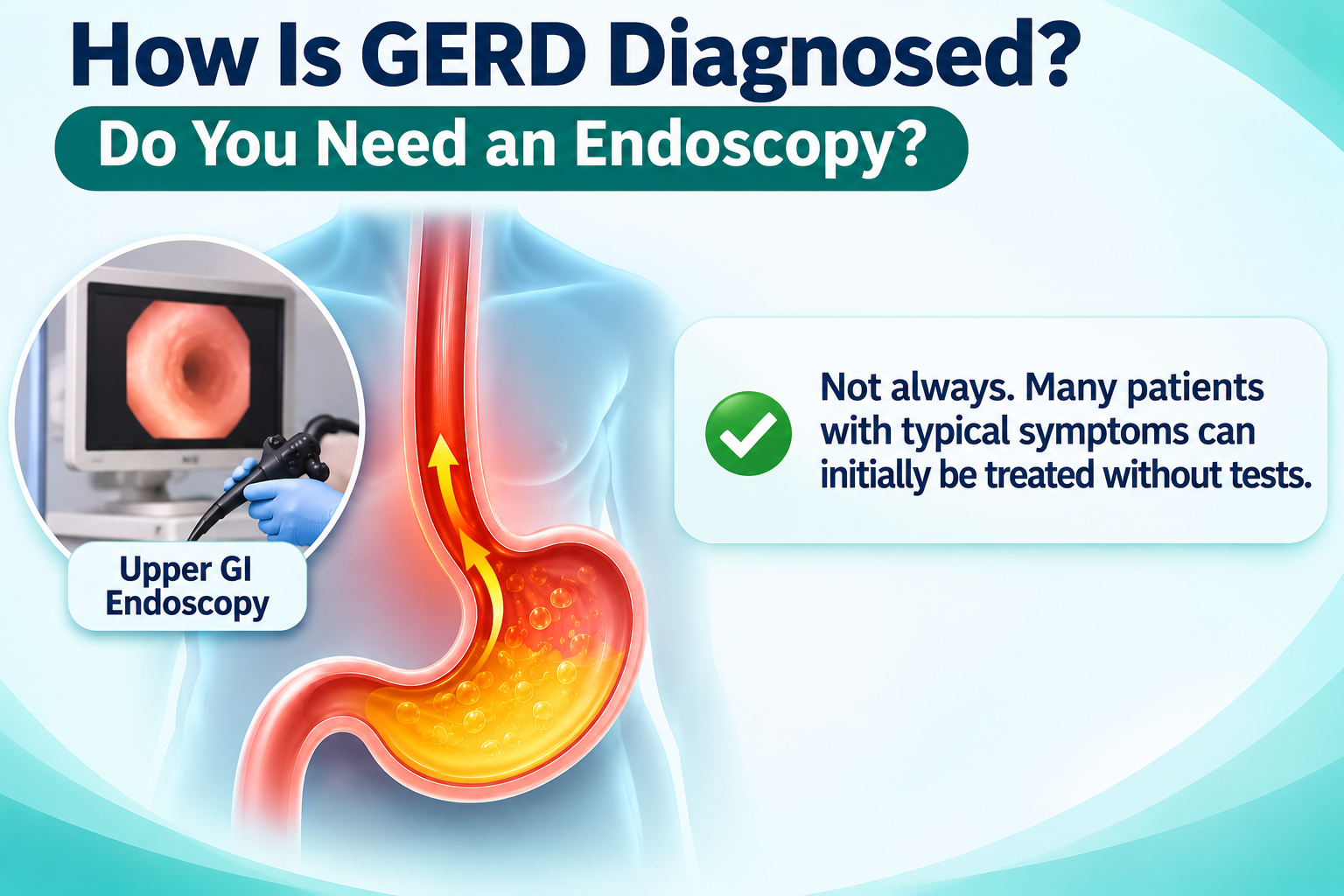
6. How Is GERD Diagnosed? Do You Need an Endoscopy?
Not every patient with GERD needs an endoscopy.
Your doctor may initially diagnose GERD based on your symptoms, medical history and response to appropriate treatment.
However, additional tests may be necessary when symptoms persist, warning signs are present or surgery is being considered.
Upper GI Endoscopy - An upper gastrointestinal endoscopy uses a thin, flexible camera to examine the food pipe, stomach and first part of the small intestine.
It can help identify:
- Inflammation of the esophagus
- Esophageal narrowing
- Hiatal hernia
- Barrett's esophagus
- Other possible causes of symptoms
An endoscopy may appear normal even when a patient has GERD.
24-Hour Esophageal pH Monitoring - This test measures acid exposure in the food pipe over time. It helps determine whether abnormal acid reflux is present and whether symptoms are associated with reflux episodes. In selected patients, combined pH-impedance monitoring can also detect non-acid reflux.
Esophageal Manometry - This test measures pressure and muscle activity in the food pipe. It helps evaluate swallowing function and identify major motility disorders. Manometry is particularly important before anti-reflux surgery.
Is an endoscopy compulsory before GERD surgery?
An upper GI endoscopy is generally part of the preoperative evaluation. Before surgery, the diagnosis of GERD should be established objectively, usually with reflux monitoring when needed. Esophageal manometry is also recommended to assess motility and exclude important disorders.
The exact investigations depend on the patient's symptoms and previous test results.
7. Can GERD Be Controlled with Diet and Lifestyle Changes?
Yes. Lifestyle modifications can significantly improve symptoms in many patients.
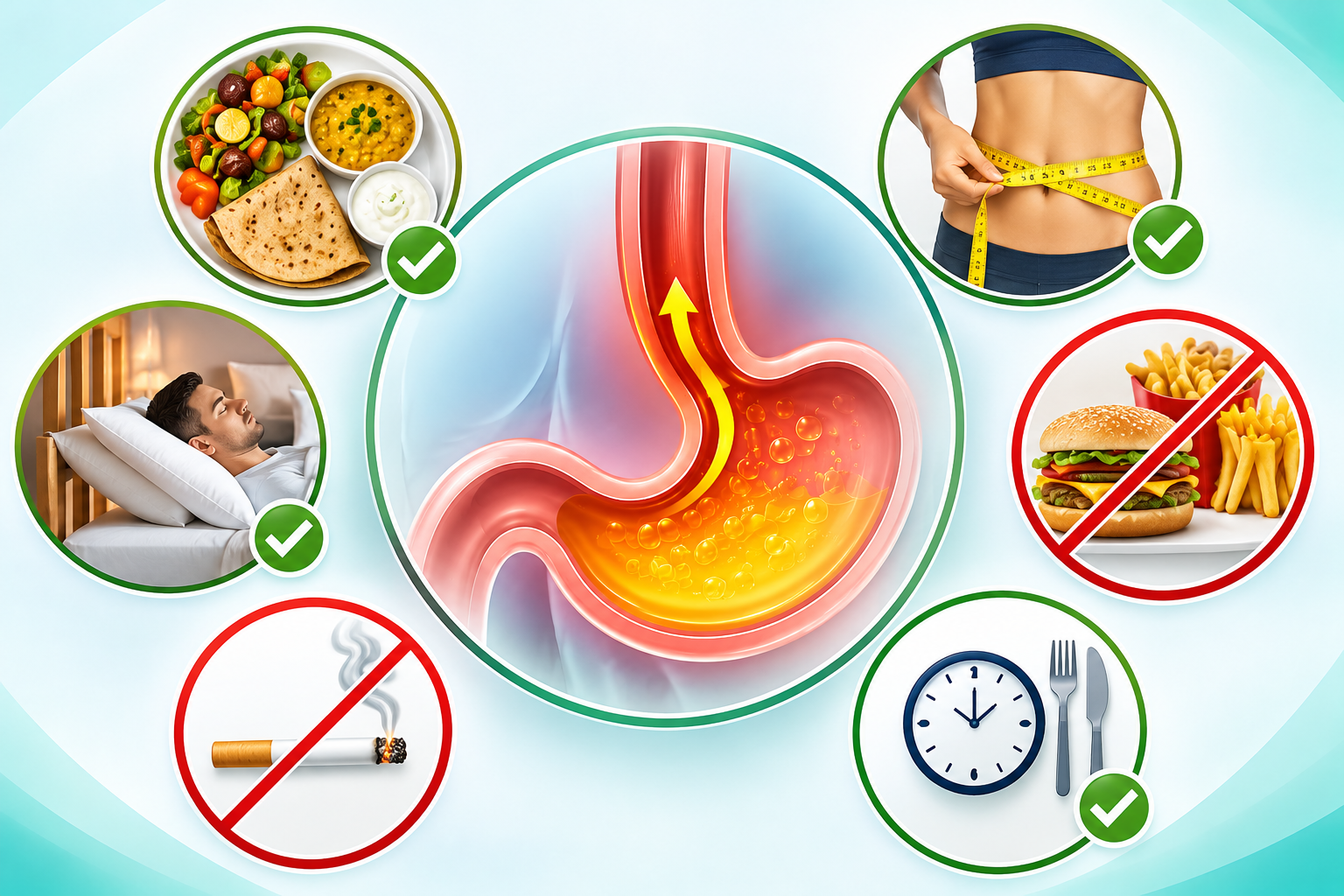
- Maintain a healthy body weight
- Weight reduction can improve GERD symptoms in patients who are overweight or obese.
- Avoid lying down immediately after meals
- Try to finish dinner at least 2–3 hours before bedtime.
- Eat smaller meals. Large meals can increase stomach distension and worsen reflux.
- Identify your trigger foods. Observe whether particular foods consistently worsen your symptoms.
- Reduce or avoid those specific triggers.
- Elevate the head end of your bed. For nighttime reflux, elevating the head end of the bed by approximately 15–20 cm or using a suitable wedge pillow may help.
Simply adding extra ordinary pillows is often less effective.
- Stop smoking. Smoking cessation has several health benefits and may help improve reflux symptoms.
- Avoid tight clothing around the abdomen. Tight belts and clothing may increase discomfort in some patients.
Remember: Lifestyle changes are important, but patients with persistent GERD may also require medication or further evaluation.
8. What Medicines Are Used to Treat GERD?
Most patients with GERD can be managed without surgery.
Treatment usually begins with lifestyle modifications and medications.
Antacids - Antacids neutralize stomach acid and may provide short-term relief from occasional heartburn. However, they do not address the underlying reflux mechanism.
Proton Pump Inhibitors (PPIs) - PPIs are commonly used medicines for GERD. Examples include:
- Pantoprazole
- Omeprazole
- Esomeprazole
- Rabeprazole
These medicines reduce acid production and help inflamed esophageal tissue heal. They are generally most effective when taken before meals, according to the prescribed schedule. For typical GERD symptoms without warning signs, doctors commonly recommend an initial PPI course of approximately eight weeks.
H2 Receptor Blockers - Medicines such as famotidine may help certain patients, particularly those with milder or intermittent symptoms.
Do GERD medicines need to be taken lifelong?
Not always. Some patients need only a limited course of treatment, while others require longer-term therapy. Patients with severe erosive esophagitis or certain complications may need ongoing treatment. The aim is to use the lowest effective treatment regimen that maintains symptom control and prevents complications.
Do not stop prescribed medicines without discussing your treatment plan with your doctor.
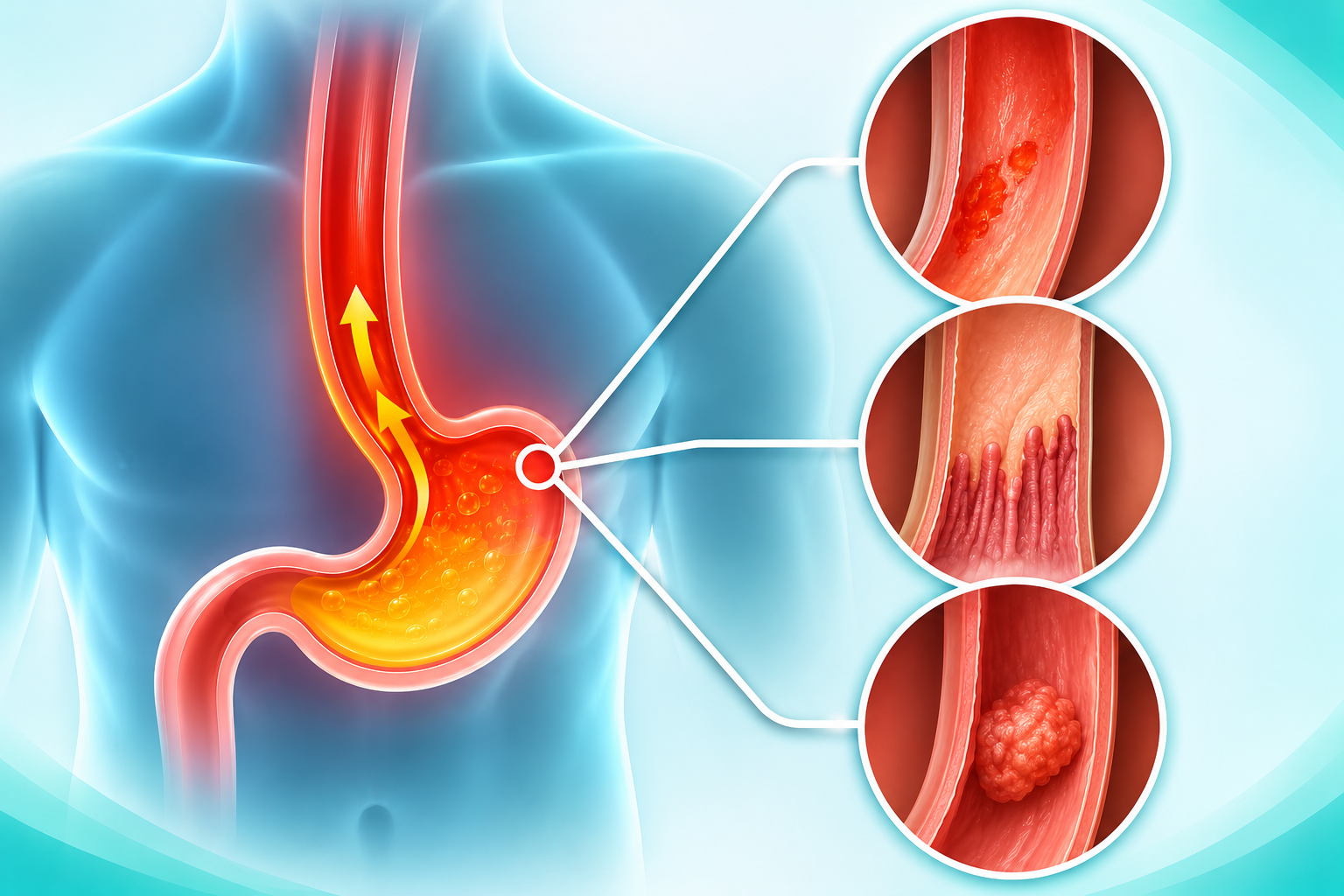
9. Can Long-Term Acid Reflux Cause Serious Problems?
Persistent or inadequately treated GERD can sometimes lead to complications.
Esophagitis - Repeated exposure to stomach acid can cause inflammation of the food pipe. This may produce pain, difficulty swallowing or bleeding.
Esophageal Stricture - Long-standing inflammation may lead to scarring and narrowing of the food pipe. Patients may experience increasing difficulty swallowing solid food.
Barrett's Esophagus - In some patients, long-standing reflux causes changes in the lining of the lower esophagus. This condition is called Barrett's esophagus. Barrett's esophagus increases the risk of esophageal adenocarcinoma, although most people with Barrett's esophagus do not develop cancer.
Selected patients may require regular endoscopic surveillance.
Does every GERD patient develop complications?
No. Most patients do not develop serious complications, particularly when symptoms are appropriately evaluated and managed.
However, persistent symptoms and warning signs should not be ignored.
10. When Is Surgery Needed for GERD?
Most patients with GERD do not require surgery.
However, anti-reflux surgery may be an appropriate treatment option for selected patients with objectively confirmed GERD.
Surgery may be considered when:
GERD is objectively confirmed and symptoms remain troublesome - Some patients continue to experience significant reflux symptoms despite appropriately optimized medical treatment.
The patient has a large hiatal hernia - A significant hiatal hernia may require surgical repair, particularly when associated with reflux or other symptoms.
There is severe reflux-related esophageal damage - Selected patients with severe erosive esophagitis or other complications may benefit from surgery.
The patient prefers an alternative to long-term medication - Some patients with confirmed GERD may choose surgery after understanding its potential benefits, risks and alternatives.
Persistent regurgitation affects quality of life - Surgery may help appropriately selected patients with troublesome regurgitation, especially when acid suppression alone does not adequately control it.
Is surgery necessary if acidity medicines do not work?
Not necessarily. Persistent symptoms despite PPIs do not always mean that surgery is needed.
Other conditions, such as functional heartburn, reflux hypersensitivity, swallowing disorders and delayed gastric emptying, may produce similar symptoms.
A proper evaluation is essential before deciding on surgery.
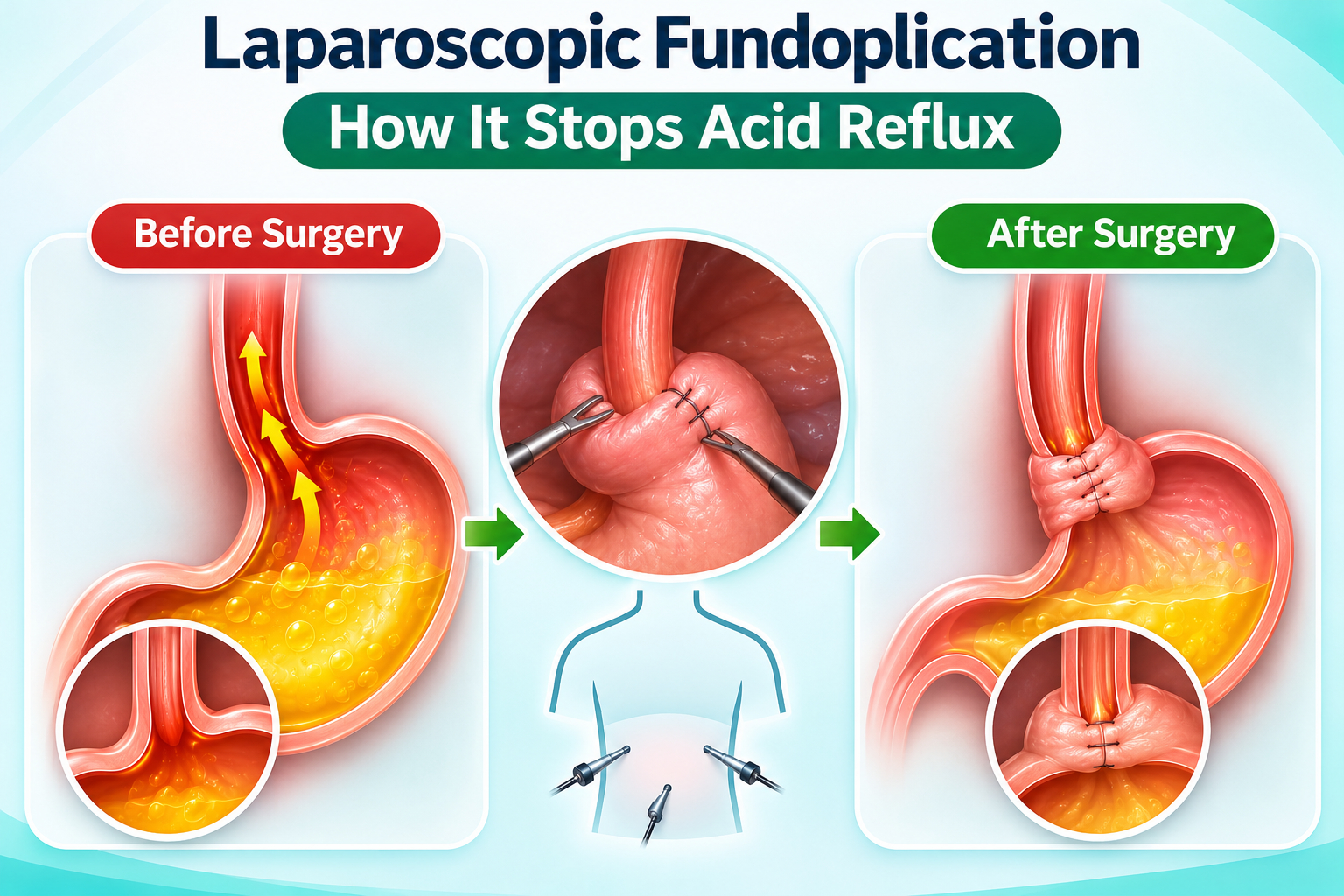
11. What Is Laparoscopic Fundoplication? How Does It Stop Acid Reflux?
Laparoscopic fundoplication is a minimally invasive operation used to treat GERD in appropriately selected patients.
The procedure aims to strengthen the natural barrier between the stomach and food pipe.
How is the surgery performed?
The surgeon makes a few small incisions in the abdomen. A camera and specialized surgical instruments are introduced through these incisions. The upper part of the stomach, called the fundus, is carefully wrapped around the lower portion of the food pipe. This wrap helps reduce the backward movement of stomach contents into the esophagus. If a hiatal hernia is present, it is usually repaired during the same operation.
What is Nissen Fundoplication?
Nissen fundoplication involves wrapping the upper stomach completely around the lower esophagus, creating a 360-degree wrap.
What is Partial Fundoplication?
In selected patients, a partial wrap may be preferred.
Examples include:
- Toupet fundoplication — approximately 270-degree posterior wrap.
- Dor fundoplication — approximately 180-degree anterior wrap.
The choice depends on factors such as esophageal function, symptoms and surgical assessment.
Can fundoplication be performed robotically?
Yes.
Robotic-assisted fundoplication is another minimally invasive approach that may be used in suitable patients. Robotic systems offer three-dimensional visualization and articulated instruments, which can assist the surgeon during delicate dissection and suturing. However, robotic surgery is not automatically superior for every patient. The choice between laparoscopic and robotic surgery depends on the individual case, available facilities and surgical expertise.
12. What Are the Benefits and Risks of Anti-Reflux Surgery?
Anti-reflux surgery can provide substantial symptom improvement in appropriately selected patients.
Potential benefits
Better control of reflux symptoms - Many patients experience significant improvement in heartburn and regurgitation.
Reduced dependence on acid-suppressing medicines - Some patients can stop or reduce their GERD medicines after surgery. However, others may still need medication in the future.
Minimally invasive approach - Laparoscopic and robotic techniques use small incisions and generally allow earlier recovery than traditional open surgery.
Hiatal hernia repair - When appropriate, a hiatal hernia can be repaired during the same procedure.
Possible risks and side effects - As with any surgery, complications can occur.
These include:
- Bleeding or infection
- Injury to nearby organs
- Difficulty swallowing, particularly during early recovery
- Bloating or difficulty releasing gas
- Reduced ability to belch or vomit
- Persistent or recurrent reflux
- Rarely, the need for additional procedures or repeat surgery
Can GERD return after surgery?
Yes. Although many patients achieve durable symptom relief, reflux can recur over time.
Some patients may require medicines again or occasionally further intervention.
Careful patient selection and appropriate preoperative testing are important for achieving good outcomes.
13. How Long Does Recovery Take After GERD Surgery?
Recovery depends on the patient's health, the type of operation and whether additional procedures are required.
Hospital stay - Many patients undergoing uncomplicated laparoscopic fundoplication can go home within one or two days. Some may need a longer hospital stay.
Eating after surgery - Your surgeon will usually recommend a gradual progression of diet.
This may include:
- Liquids initially.
- Soft or pureed foods during early recovery.
- Gradual introduction of more solid foods as swallowing improves.
Diet progression varies according to the procedure and individual recovery.
Return to normal activities - Many patients can resume light daily activities within a few days. Desk-based work may be possible within approximately one to two weeks, depending on recovery. Heavy lifting and strenuous exercise may need to be avoided for several weeks according to the surgeon's advice.
Is difficulty swallowing normal after surgery?
Mild temporary swallowing difficulty can occur because of postoperative swelling around the surgical wrap. This often improves gradually. However, severe or persistent difficulty swallowing, inability to tolerate liquids, repeated vomiting, fever or worsening abdominal pain requires prompt medical attention.
Will I need lifelong dietary restrictions?
Usually not. Most patients gradually return to a varied diet, although eating slowly, chewing thoroughly and avoiding large meals may remain helpful.
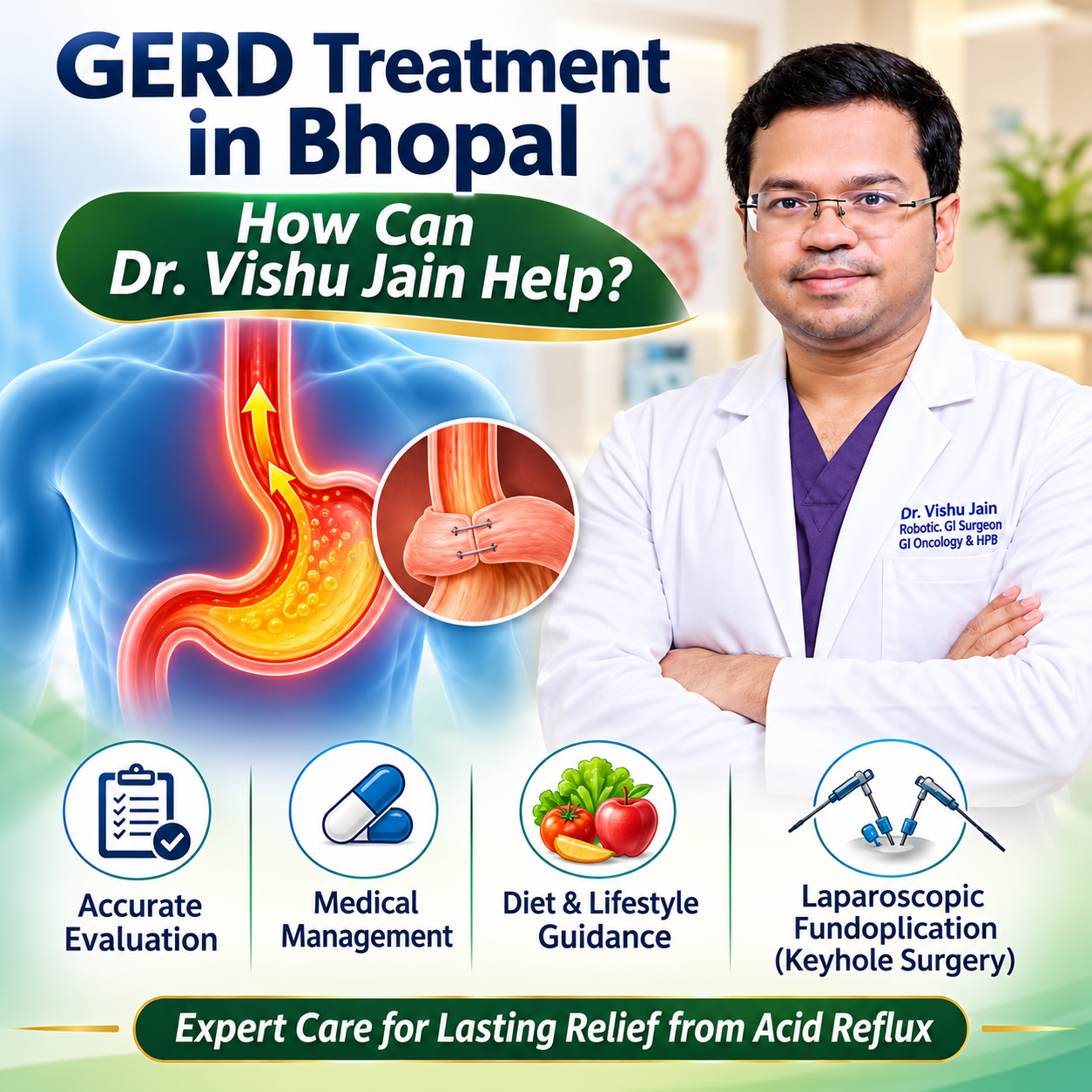
14. GERD Treatment in Bhopal: How Can Dr. Vishu Jain Help?
Persistent acidity and reflux can affect your sleep, eating habits, work and overall quality of life.
Successful treatment begins with identifying the actual cause of symptoms rather than simply taking acidity medicines repeatedly.
Dr. Vishu Jain is a Consultant Robotic, Laparoscopic, GI & HPB Surgeon in Bhopal, with specialized training in surgical gastroenterology from AIIMS Jodhpur.
His approach to patients with GERD emphasizes:
- Understanding symptoms and their impact on daily life.
- Identifying patients who require endoscopy or additional investigations.
- Evaluating for hiatal hernia and reflux-related complications.
- Considering medical and lifestyle treatment options.
- Assessing whether anti-reflux surgery is appropriate.
- Providing individualized surgical care when indicated.
- Explaining expected benefits, limitations and risks before treatment.
Not every patient with GERD needs surgery. The right treatment depends on the diagnosis, severity of symptoms, investigation results and individual preferences.
The goal is to provide ethical, patient-first care with an emphasis on precision, comfort and appropriate treatment
Struggling with Frequent Acidity or Acid Reflux?
Frequent heartburn, sour regurgitation and persistent digestive discomfort should not be ignored.
A proper evaluation can help determine whether your symptoms are caused by GERD or another digestive condition.
Consult Dr. Vishu Jain
Consultant Robotic, Laparoscopic, GI & HPB Surgeon
Bhopal, Madhya Pradesh
Specialized Care for GERD, Hiatal Hernia and Digestive Disorders
Where Precision Meets Compassion
Book a Consultation to Discuss Your Symptoms and Treatment Options.
---
Medical disclaimer: This information is intended for patient education and does not replace an individualized medical consultation. Diagnosis and treatment should be based on clinical evaluation and appropriate investigations.
FAQ
Frequently asked questions
GERD can often be controlled effectively with lifestyle changes and medications. Anti-reflux surgery can provide long-lasting relief in selected patients, but no treatment guarantees that reflux will never return.
Most people with GERD do not develop serious complications. However, persistent reflux can sometimes cause inflammation, esophageal narrowing or Barrett's esophagus. Symptoms that continue or worsen should be evaluated.
Yes. GERD can cause burning or discomfort in the chest. However, chest pain may also be caused by heart disease or other serious conditions. New, severe or unexplained chest pain requires urgent medical assessment.
No. Patients with typical reflux symptoms and no warning signs may initially receive treatment without endoscopy. Endoscopy is more important when warning signs, persistent symptoms or suspected complications are present.
GERD may contribute to chronic cough, hoarseness or throat symptoms in some patients. However, these symptoms are not specific to GERD. Other causes should be evaluated before attributing them to acid reflux.
The duration depends on the diagnosis and severity of GERD. Some patients need a short treatment course, while others benefit from maintenance therapy. Your doctor should periodically review the need for continued medication.
Laparoscopic fundoplication is an established operation that can be performed safely in appropriately selected patients. However, it carries surgical risks and possible side effects. A thorough preoperative evaluation and discussion with an experienced surgeon are essential.
Some patients no longer require regular acid-suppressing medicines after surgery. Others may need occasional or ongoing treatment. The result varies between individuals.
Yes. Reflux can recur due to several factors, including changes in the surgical wrap or progression of the underlying condition. Persistent or recurrent symptoms should be evaluated rather than automatically treated as recurrent GERD.
GERD is a condition in which stomach contents repeatedly reflux into the food pipe, causing troublesome symptoms or complications. A hiatal hernia occurs when part of the stomach moves upward through the diaphragm. A hiatal hernia can contribute to GERD, but not everyone with a hiatal hernia has significant reflux.
Learn more
What Are the Symptoms of GERD?
Learn about GERD symptoms, including heartburn, acid reflux, chest discomfort and swallowing problems. Know when to consult Dr. Vishu Jain in Bhopal.
Read moreHow Is GERD Diagnosed? What Tests Are Needed?
Learn how GERD is diagnosed with endoscopy, 24-hour pH monitoring and esophageal manometry. Understand when reflux tests are needed in Bhopal.
Read moreHow Do We Treat GERD?
Discover Dr. Vishu Jain's approach to GERD treatment in Bhopal, from diagnosis and medicines to laparoscopic and robotic anti-reflux surgery.
Read moreWhat Are the Treatment Options for GERD?
Explore GERD treatment options in Bhopal, including medicines, lifestyle changes, laparoscopic fundoplication and robotic anti-reflux surgery.
Read moreVisit us
Our Clinic
Gastrocare Hospital
Main Rd No. 3, near Personal Branch SBI, E-3, Arera Colony, Bhopal, Madhya Pradesh 462016
Mon–Sat: 9:00 am – 8:00 pm
Find us
Our Location
Gastrocare Hospital
Main Rd No. 3, near Personal Branch SBI, E-3, Arera Colony, Bhopal, Madhya Pradesh 462016