
When Should You Consult a Gastroenterologist? Key Symptoms and Decisions
Understanding when to consult a gastroenterologist can be crucial for maintaining your gastrointestinal health. This guide aims to empower you with the kno
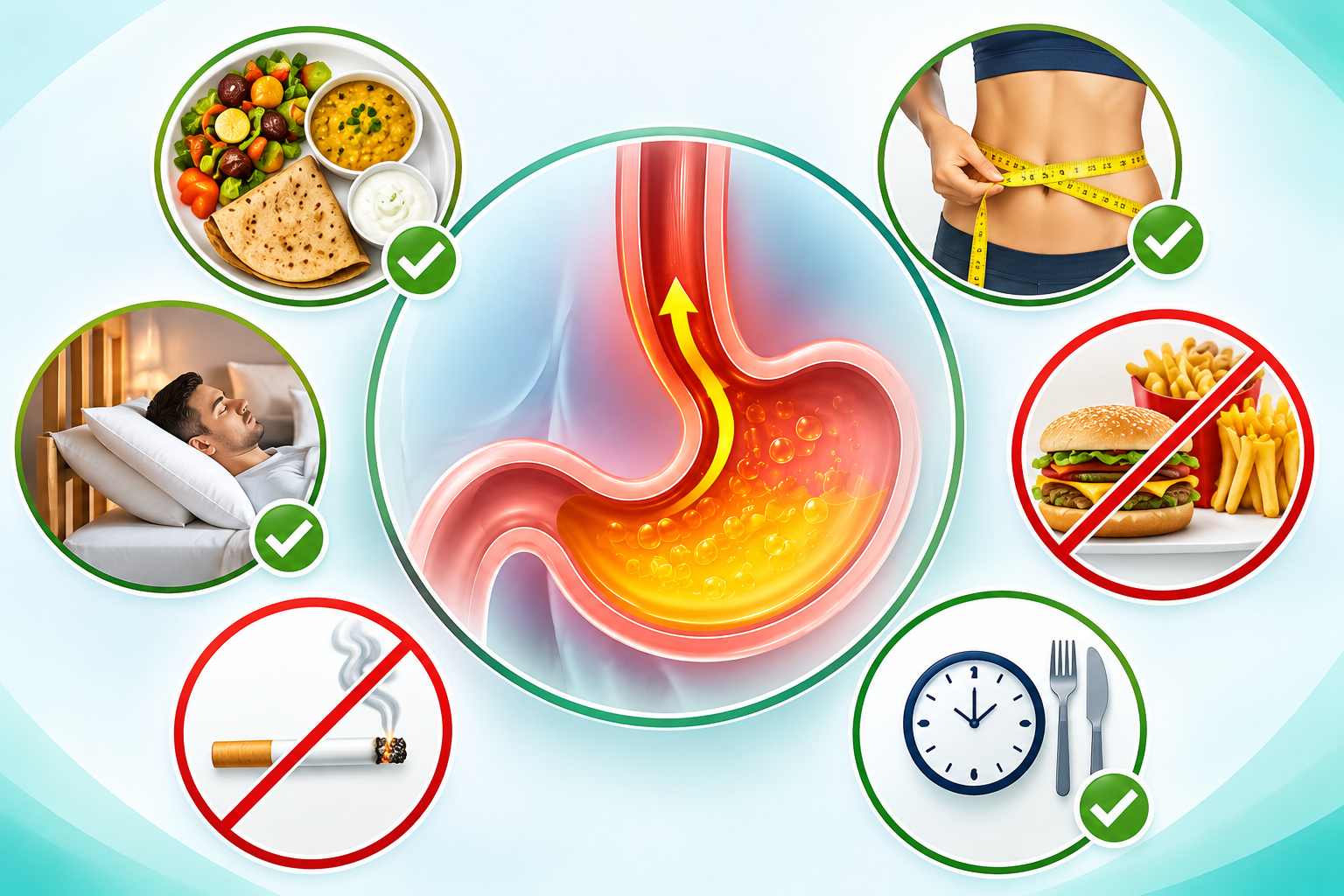
Frequent acidity, heartburn and acid reflux can affect your eating habits, sleep and daily activities. However, not every patient with these symptoms has the same underlying problem.
At our practice, the first priority is to understand the cause of your symptoms and recommend treatment appropriate for your individual condition.
Step 1: Listening to Your Symptoms
We begin with a detailed discussion about your symptoms, including:
We also assess relevant medical conditions, lifestyle factors and previous investigations.
Step 2: Identifying Warning Signs
Some symptoms require further evaluation rather than simply prescribing acidity medicines.
These include:
New, severe or unexplained chest pain requires urgent medical assessment to exclude heart-related causes.
Step 3: Choosing the Right Investigations
Not every patient needs an endoscopy or specialized reflux tests.
Depending on your symptoms and previous treatment, investigations may include:
Step 4: Establishing the Correct Diagnosis
Heartburn does not always mean GERD.
Other conditions, including functional heartburn, reflux hypersensitivity and esophageal motility disorders, may produce similar symptoms.
We aim to distinguish these conditions before recommending long-term treatment or surgery.
Our Treatment Philosophy
Not every patient with GERD needs surgery. Many patients achieve good symptom control with appropriate lifestyle changes and medicines.
Our goal is to provide compassion-driven, precision care that prioritizes patient comfort, appropriate treatment and informed decision-making.
Once GERD has been appropriately evaluated, we discuss treatment options based on symptom severity, investigation findings, associated conditions and patient preferences.
1. Lifestyle and Dietary Modifications
For many patients, treatment begins with simple changes:
These measures can reduce symptoms and improve daily comfort.
2. Medical Treatment for GERD
Most patients with GERD can be treated without surgery.
Medicines called proton pump inhibitors (PPIs), such as pantoprazole or esomeprazole, reduce stomach acid production and help heal reflux-related inflammation.
Other medicines may be recommended depending on individual symptoms.
We review the response to treatment and aim to use an appropriate effective regimen rather than continuing medicines unnecessarily.
3. What If Symptoms Continue Despite Medicines?
Persistent symptoms do not automatically mean that surgery is required.
We first assess:
4. When Do We Consider Anti-Reflux Surgery?
Surgery may be considered in selected patients with objectively confirmed GERD, particularly when:
5. Laparoscopic Fundoplication
Laparoscopic fundoplication is a minimally invasive operation that aims to strengthen the natural barrier between the stomach and food pipe.
During surgery, the upper part of the stomach is wrapped around the lower esophagus to reduce reflux.
If a hiatal hernia is present, it is generally repaired during the same operation.
The type of fundoplication is selected according to the patient's anatomy, esophageal function and clinical findings.
6. Robotic Anti-Reflux Surgery
Robotic-assisted fundoplication is another minimally invasive option for selected patients.
Robotic technology provides three-dimensional visualization and articulated surgical instruments, which can assist during delicate dissection and suturing.
However, robotic surgery is not automatically better for every patient. The most suitable approach depends on individual circumstances and surgical assessment.
7. Explaining Benefits, Risks and Expectations
Before recommending surgery, we discuss:
8. Follow-Up and Long-Term Care
GERD management does not end after prescribing medication or performing surgery.
Follow-up may include reviewing symptom control, adjusting medicines, monitoring complications when indicated and assessing recovery after surgery.
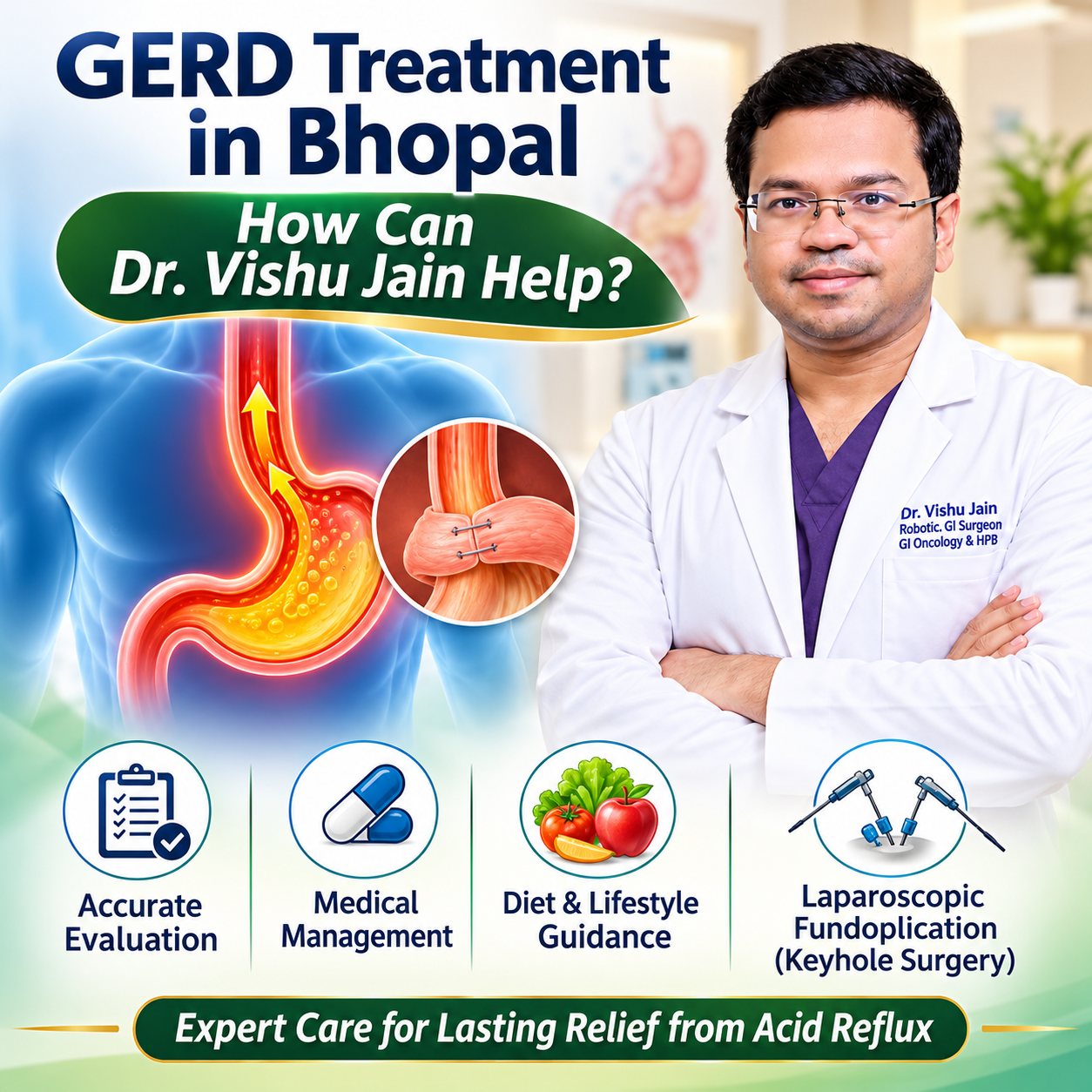
GERD Treatment with Dr. Vishu Jain in Bhopal
Dr. Vishu Jain is a Consultant Robotic, Laparoscopic, GI & HPB Surgeon with specialized training in Surgical Gastroenterology from AIIMS Jodhpur.
His approach emphasizes accurate diagnosis, individualized treatment, ethical surgical decision-making and compassionate patient care.
Our goal is not simply to treat acidity, but to identify its cause and help patients achieve sustainable symptom control and better quality of life.
FAQ
No. Most patients with GERD can be managed with lifestyle changes and medicines. Surgery is considered only for appropriately selected patients after clinical evaluation and necessary investigations.
We discuss your symptoms, previous treatment, lifestyle factors and medical history. Based on the findings, we recommend appropriate treatment or further investigations when necessary.
Persistent symptoms require reassessment. We review medication use, consider other possible diagnoses and recommend investigations such as endoscopy or reflux monitoring when appropriate.
The decision depends on objectively confirmed reflux, symptom severity, response to treatment, esophageal function, associated hiatal hernia and the patient's preferences.
Neither option is best for every patient. Medicines are effective for many people, while surgery may provide durable symptom relief in selected patients. Both options have benefits and limitations.
Yes. Many patients experience long-lasting improvement, but reflux can recur. Some patients may need medication or further evaluation in the future.
Learn about GERD symptoms, including heartburn, acid reflux, chest discomfort and swallowing problems. Know when to consult Dr. Vishu Jain in Bhopal.
Read moreLearn how GERD is diagnosed with endoscopy, 24-hour pH monitoring and esophageal manometry. Understand when reflux tests are needed in Bhopal.
Read moreExplore GERD treatment options in Bhopal, including medicines, lifestyle changes, laparoscopic fundoplication and robotic anti-reflux surgery.
Read moreVisit us
Main Rd No. 3, near Personal Branch SBI, E-3, Arera Colony, Bhopal, Madhya Pradesh 462016
Mon–Sat: 9:00 am – 8:00 pm
Find us
Main Rd No. 3, near Personal Branch SBI, E-3, Arera Colony, Bhopal, Madhya Pradesh 462016