
Back to ResourcesPatient Education
Decoding Gastrointestinal Symptoms: When to Consult a Specialist
Health education · AI-assisted
Dr. Vishu Jain•November 14, 2026•5 views
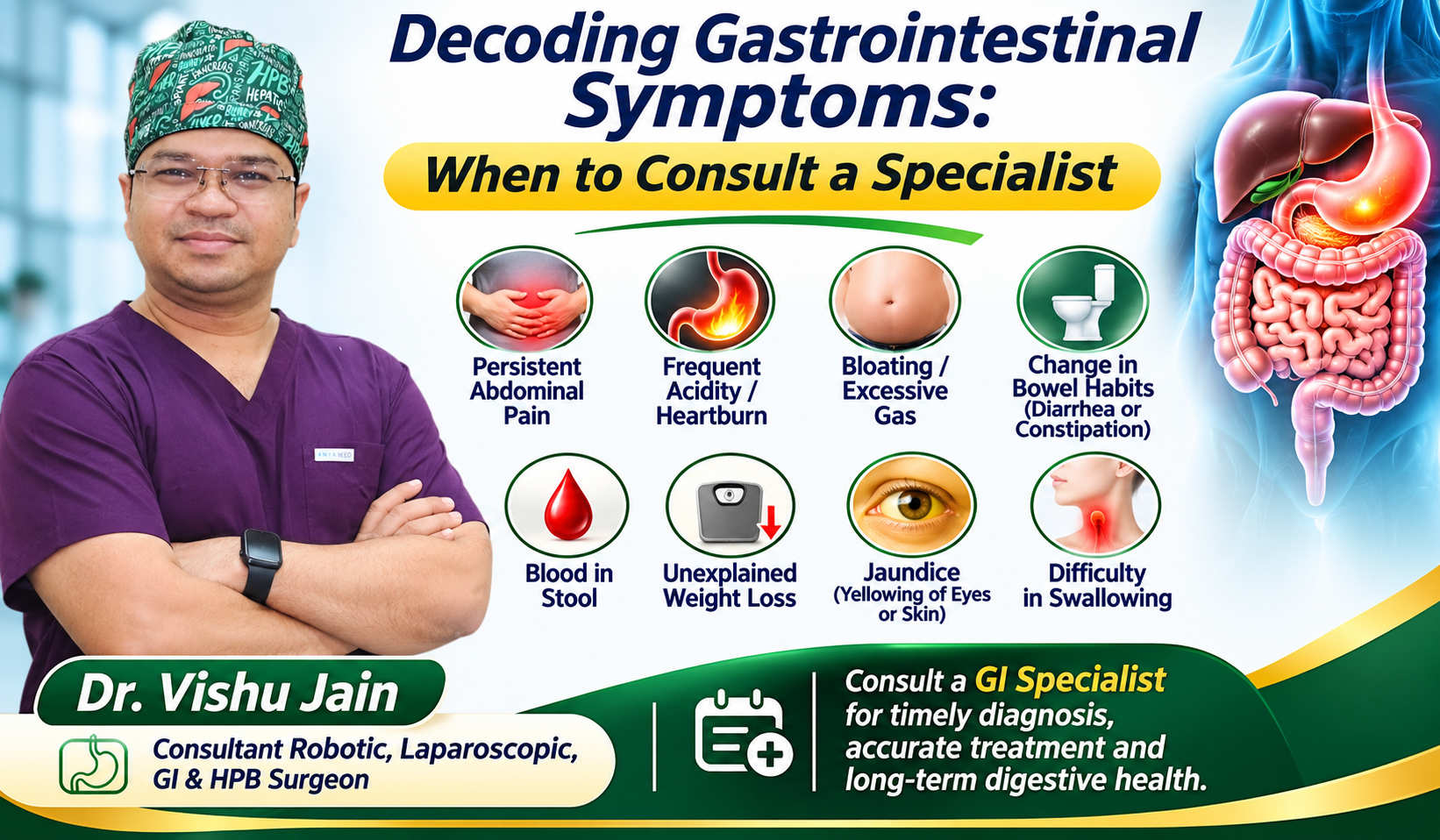
Navigating through the complexities of gastrointestinal health can be challenging. Understanding when to seek specialized care is crucial for maintaining your well-being. In this article, we will guide you through recognizing the signs and symptoms that may require the expertise of a gastroenterologist. Dr. Vishu Jain, a Consultant in GI, HPB, Laparoscopic, and Liver Transplant Surgery in Bhopal, shares insights to help you make informed decisions about your health.
Understanding Your Symptoms: What to Note
Gastrointestinal symptoms can vary widely, and it's important to pay attention to what your body is telling you. Common symptoms to be aware of include abdominal pain, bloating, nausea, vomiting, diarrhea, constipation, and changes in bowel habits. Keeping a symptom diary can be helpful. Note the frequency, duration, and intensity of your symptoms, as well as any patterns you observe. This information can provide valuable insights into your condition and assist healthcare providers in making an accurate diagnosis.
When to Worry: Red Flags in Gastrointestinal Health
While some gastrointestinal symptoms may be mild and temporary, others can indicate more serious conditions. Red flags that require immediate medical attention include severe abdominal pain, unexplained weight loss, persistent vomiting, blood in stool, and difficulty swallowing. These symptoms could be indicative of underlying issues such as gastrointestinal bleeding, infections, or cancers. It's crucial to differentiate between mild discomfort and signs that warrant urgent care.
Recognizing Patterns: When to See a Specialist
Determining when to consult a gastroenterologist involves recognizing patterns in your symptoms. Chronic issues, like ongoing heartburn, persistent diarrhea, or long-term abdominal pain, often require specialized evaluation. If your symptoms are not improving with over-the-counter treatments or if they are impacting your daily life, it may be time to seek a specialist's opinion. Reflect on questions like: How long have I been experiencing these symptoms? Are they getting worse? This self-assessment can guide your decision to seek expert care.
Evaluating Your Options: Generalist vs. Specialist
General practitioners play a vital role in managing initial gastrointestinal concerns. They can offer preliminary evaluations and treatments. However, if your symptoms persist or are complex, a referral to a gastroenterologist may be necessary. Specialists like Dr. Vishu Jain are equipped with the expertise to handle intricate cases involving the digestive system. Choosing the right specialist involves considering their experience with conditions similar to yours and their approach to treatment.
Preparing for Your First Consultation: Key Questions to Ask
Before your appointment with a gastroenterologist, prepare a list of questions to ensure a productive consultation. Ask about potential diagnoses for your symptoms, recommended tests, and possible treatment options. Gather relevant medical records, including previous test results and a list of medications you're currently taking. Effective communication of your symptoms and medical history is key to receiving appropriate care.
Treatment Pathways: Understanding Your Choices
Treatment options for gastrointestinal conditions vary based on your symptoms and diagnosis. Common approaches include dietary modifications, medications, and minimally invasive procedures such as laparoscopic and robotic surgery. These techniques, which Dr. Vishu Jain specializes in, offer benefits like reduced recovery time and minimal scarring. Treatment decisions are influenced by factors such as the severity of your condition, your overall health, and your personal preferences.
Post-Consultation Guidance: What to Expect Next
After your consultation, your gastroenterologist may recommend diagnostic tests such as endoscopy, colonoscopy, or imaging studies to further evaluate your condition. Understanding these procedures and their purposes can alleviate anxiety. Follow-up appointments are crucial for monitoring your progress and adjusting treatment plans as needed. Ongoing management may involve lifestyle changes, medication adjustments, and regular check-ups to ensure optimal gastrointestinal health.
In conclusion, being proactive about your gastrointestinal health is essential. Recognize the signs that warrant specialized care and seek guidance from experts like Dr. Vishu Jain when needed. Understanding your symptoms and treatment options empowers you to make informed decisions and take charge of your health. For more information, consider consulting a specialist.
Clinic Location & Consultation Information
## Visit Dr. Vishu Jain
Gastrocare Hospital, Main Rd No. 3, near Personal Branch SBI, E-3, Arera Colony, Bhopal, Madhya Pradesh, 462016
Phone: 7838948761
WhatsApp: 7838948761
Email: dr.vishujain@gmail.com
More health resources
Read more articles from Dr. Vishu Jain.
Read relevant articlesRelated on Our Expertise
More articles
Understanding Laparoscopic Esophagectomy
Laparoscopic esophagectomy is a minimally invasive surgical procedure used to remove part or all of the esophagus, often due to cancer or severe damage. Th
Read more →Spotting the Signs: When to Consult a Gastroenterologist for Your Health
Learn when to consult a gastroenterologist for persistent acidity, abdominal pain, bloating, blood in stool, jaundice, or unexplained weight loss.
Read more →What Is Laparoscopic Gastrectomy?
Learn what laparoscopic gastrectomy is, how minimally invasive stomach removal surgery is performed, its benefits, risks, and recovery process.
Read more →What is a Liver Transplant?
A liver transplant is a surgical procedure that involves replacing a diseased liver with a healthy one from a donor. This treatment is often recommended fo
Read more →