
Back to ResourcesSmall bowel
What Is Small Bowel Resection?
Health education · AI-assisted
Dr. Vishu Jain•November 13, 2026•10 views
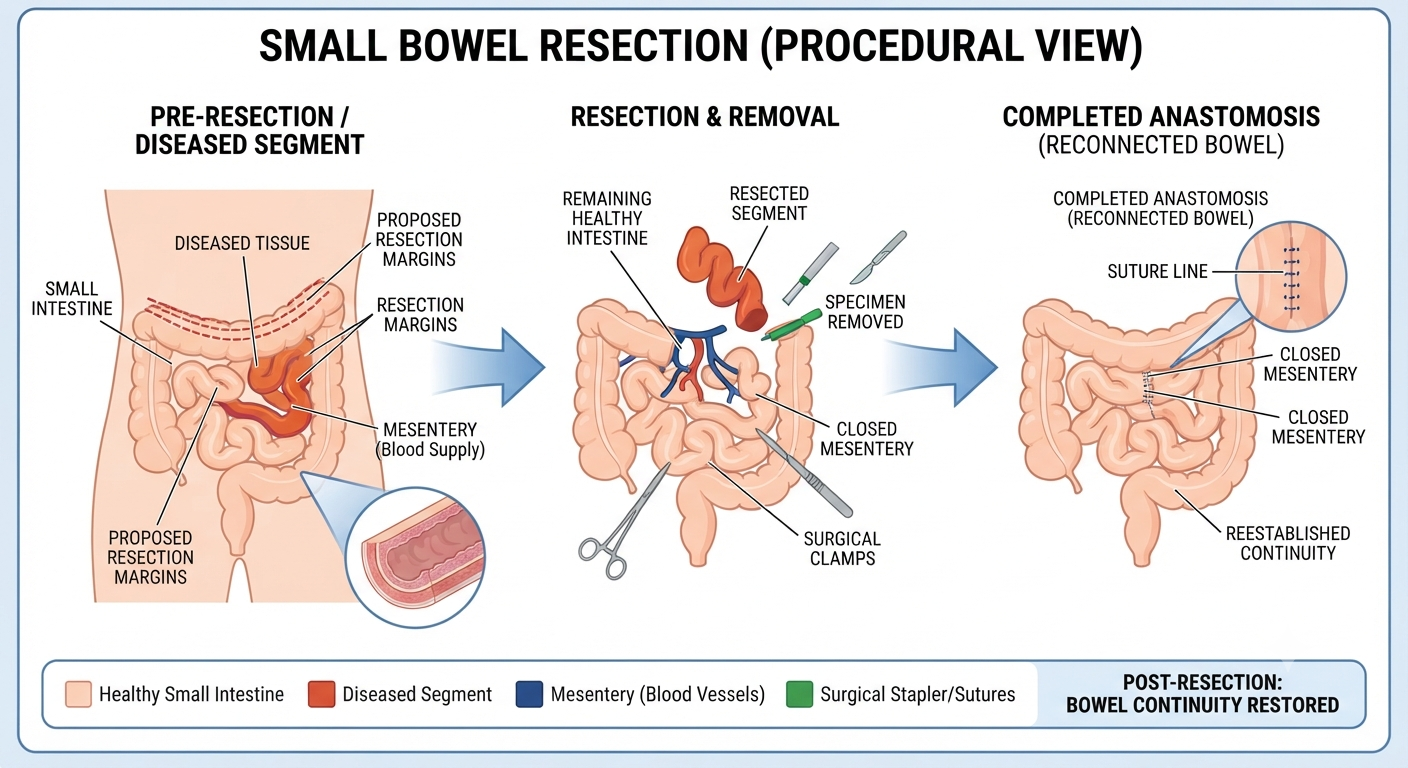
Small Bowel Resection: An Overview
Small bowel resection is a surgical procedure involving the removal of a portion of the small intestine. This operation is generally performed to treat various conditions that affect the small intestine, such as blockages, bleeding, or cancer. Understanding the procedure, its indications, and recovery can help patients make informed decisions about their healthcare.
Small bowel resection involves surgically removing a diseased or damaged section of the small intestine. The remaining healthy ends are then joined together, allowing the digestive tract to function normally. This procedure can be performed using either open surgery or minimally invasive techniques like laparoscopy.
Why Is Small Bowel Resection Used?
This procedure is primarily used to treat conditions such as:
- Obstructions: Blockages that prevent the passage of food and fluids.
- Cancer: To remove malignant tumors.
- Crohn's Disease: When medication is ineffective, surgery may be necessary to remove affected sections.
- Infections or Injuries: Severe cases may require surgical intervention.
When Is Small Bowel Resection Recommended?
Doctors recommend small bowel resection when:
- Non-surgical treatments have failed.
- There is a risk of complications from obstructions or perforations.
- Cancerous growths are present and need removal.
When Is Small Bowel Resection Not Appropriate?
Small bowel resection may not be suitable for patients with:
- Severe underlying health conditions that increase surgical risks.
- Extensive disease that affects multiple areas of the intestine, making resection impractical.
How Does Small Bowel Resection Work?
The procedure involves:
1. Anesthesia: General anesthesia is administered to ensure the patient is asleep and pain-free.
2. Incision: Depending on the method, a large incision or several small incisions are made.
3. Resection: The diseased segment is removed.
4. Anastomosis: The two healthy ends are connected.
5. Closure: The incision is closed with sutures or staples.
What Happens During the Procedure?
During the surgery, the surgeon carefully examines the small intestine, identifies the affected section, and removes it. The healthy ends are then stitched together. The entire process may take several hours, depending on the complexity of the case.
Preparation for Small Bowel Resection
Preparation includes:
- Medical Evaluation: Assessing overall health and readiness for surgery.
- Dietary Instructions: Patients may be advised to follow a special diet or fast before surgery.
- Medication Review: Adjustments may be needed for certain medications.
Risks and Complications
As with any surgery, small bowel resection carries risks such as:
- Infection
- Bleeding
- Leak at the anastomosis site
- Bowel obstruction
- Nutritional deficiencies
What to Expect After the Procedure
Post-surgery, patients can expect:
- A hospital stay for monitoring and recovery.
- Pain management with medications.
- Gradual reintroduction of food.
Outcomes of Small Bowel Resection
Successful resection often leads to symptom relief and improved quality of life. However, long-term outcomes depend on the underlying condition and overall health.
Alternatives to Small Bowel Resection
In some cases, non-surgical treatments like medication or dietary changes may manage symptoms. Discussing all options with a healthcare provider is crucial.
About Dr. Vishu Jain
Dr. Vishu Jain is a Consultant in GI, HPB, Laparoscopic, and Liver transplant surgery with expertise in minimally invasive techniques. His calm and empathetic approach ensures patients receive comprehensive care tailored to their needs.
Consultation and Next Steps
For more information or to discuss your options, consult a specialist.
1. How long is the recovery period after small bowel resection?
Recovery can vary but typically ranges from several weeks to a few months. Patients should follow their doctor’s advice for a smooth recovery.
2. Can small bowel resection affect digestion?
Yes, there may be temporary changes in digestion, but most patients adapt over time.
3. Is small bowel resection a common procedure?
While not as common as some other surgeries, it is a well-established procedure for treating specific intestinal conditions.
4. Are there dietary restrictions after the surgery?
Initially, a soft or liquid diet may be recommended, gradually returning to normal as tolerated.
5. What are the signs of complications I should watch for?
Watch for signs such as fever, severe pain, or unusual discharge from the incision site, and contact your doctor if they occur.
Visit Dr. Vishu Jain
Main Rd No. 3, near Personal Branch SBI, E-3, Arera Colony, Bhopal, Madhya Pradesh, 462016
Phone: 7838948761
WhatsApp: 7838948761
Email: dr.vishujain@gmail.com
Clinic Location & Consultation Information
## Visit Dr. Vishu Jain
Gastrocare Hospital, Main Rd No. 3, near Personal Branch SBI, E-3, Arera Colony, Bhopal, Madhya Pradesh, 462016
Phone: 7838948761
WhatsApp: 7838948761
Email: dr.vishujain@gmail.com
More health resources
Read more articles from Dr. Vishu Jain.
Read relevant articlesMore articles
Understanding Laparoscopic Esophagectomy
Laparoscopic esophagectomy is a minimally invasive surgical procedure used to remove part or all of the esophagus, often due to cancer or severe damage. Th
Read more →Spotting the Signs: When to Consult a Gastroenterologist for Your Health
Learn when to consult a gastroenterologist for persistent acidity, abdominal pain, bloating, blood in stool, jaundice, or unexplained weight loss.
Read more →What Is Laparoscopic Gastrectomy?
Learn what laparoscopic gastrectomy is, how minimally invasive stomach removal surgery is performed, its benefits, risks, and recovery process.
Read more →What is a Liver Transplant?
A liver transplant is a surgical procedure that involves replacing a diseased liver with a healthy one from a donor. This treatment is often recommended fo
Read more →