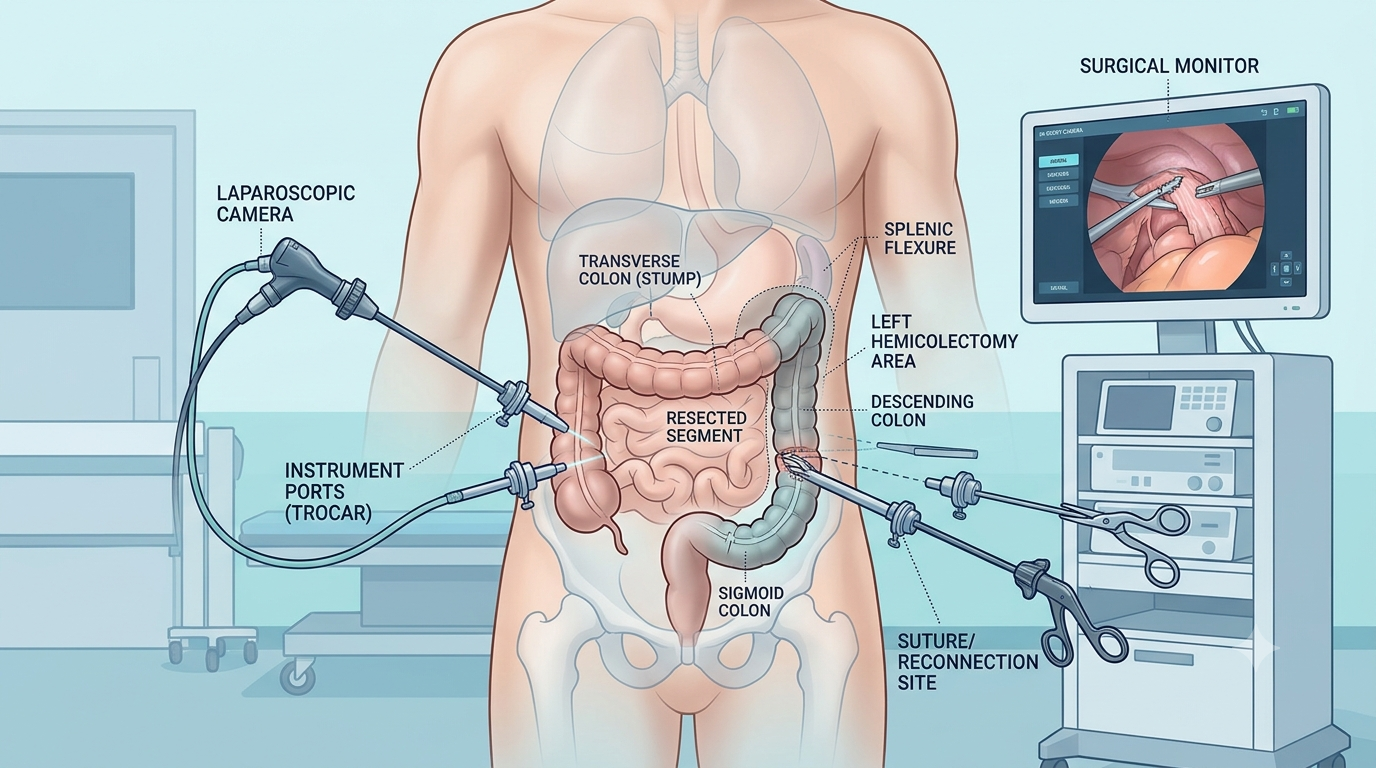
Laparoscopic Left Hemicolectomy: Understanding the Procedure### Snippet
Laparoscopic Left Hemicolectomy is a minimally invasive surgical procedure used to remove the left side of the colon. This page provides a comprehensive overview of the procedure, its indications, preparation, and what patients can expect during recovery.
Laparoscopic Left Hemicolectomy is a key surgical option for treating conditions affecting the left side of the colon, such as colorectal cancer or diverticulitis. This minimally invasive approach offers benefits like reduced recovery time and less postoperative pain compared to open surgery.
Laparoscopic Left Hemicolectomy is a surgical procedure aimed at removing the left portion of the colon. This section of the colon is responsible for absorbing water and salts from the food we consume. The procedure is typically recommended for patients with conditions such as colorectal cancer, diverticulitis, or benign tumors.
Why is it Used?
This procedure is primarily used to treat diseases affecting the left side of the colon. It helps in removing cancerous growths, alleviating symptoms of diverticulitis, and addressing other issues like severe polyps or benign tumors. The laparoscopic approach allows for a less invasive surgery with smaller incisions, leading to quicker recovery and reduced pain.
When is Laparoscopic Left Hemicolectomy Recommended?
Laparoscopic Left Hemicolectomy is recommended when there is a need to remove diseased or damaged sections of the left colon. Conditions such as colorectal cancer, chronic or recurring diverticulitis, and large benign polyps may necessitate this surgery. The decision is based on the specific condition and overall health of the patient.
When is it Not Appropriate?
This procedure may not be suitable for patients with extensive abdominal adhesions from previous surgeries, severe inflammation, or those who are not candidates for general anesthesia. In such cases, alternative treatments or open surgery might be considered.
How Does Laparoscopic Left Hemicolectomy Work?
The procedure involves making small incisions in the abdomen through which a camera and specialized surgical instruments are inserted. The surgeon then removes the affected portion of the colon while preserving as much healthy tissue as possible. The remaining ends of the colon are then reconnected.
What Happens During the Procedure?
During the surgery, the patient is placed under general anesthesia. Small incisions are made, and carbon dioxide gas is used to inflate the abdomen for better visibility. The surgeon uses a laparoscope to guide the procedure, carefully removing the diseased section of the colon and reconnecting the healthy ends.
Preparation for the Procedure
Patients are typically advised to follow a specific diet and bowel preparation routine before surgery. This might include a liquid diet and laxatives to clean the bowel. It's essential to follow the surgeon's instructions regarding medication use and fasting before the procedure.
Risks and Complications
As with any surgery, there are potential risks and complications. These might include infection, bleeding, or injury to surrounding organs. However, laparoscopic surgery generally has a lower risk of complications compared to open surgery.
What to Expect After the Procedure
Recovery from laparoscopic surgery is usually quicker than open surgery. Patients can expect to stay in the hospital for a few days post-surgery. Full recovery may take several weeks, during which patients are advised to avoid strenuous activities and follow a balanced diet.
Expected Outcomes
The outcomes of a laparoscopic left hemicolectomy are generally positive, with many patients experiencing relief from symptoms and an improved quality of life. Regular follow-up appointments are essential to monitor recovery and ensure no recurrence of disease.
Alternatives to Laparoscopic Left Hemicolectomy
Alternatives to this procedure include open hemicolectomy or non-surgical treatments, depending on the patient's condition. The choice of treatment should be discussed thoroughly with the healthcare provider.
About Dr. Vishu Jain
Dr. Vishu Jain is a Consultant in GI, HPB, Laparoscopic, and Liver Transplant Surgery with over 10 years of experience. His expertise in minimally invasive and robotic surgeries enhances patient outcomes in gastrointestinal procedures.
Consultation and Next Steps
If you are experiencing symptoms related to the left colon or have been advised to consider surgery, consult with Dr. Vishu Jain to discuss your options and determine the best course of action.
Visit Dr. Vishu Jain
Bhopal
Phone: +917838948761
WhatsApp: 7838948761
Email: dr.vishujain@gmail.com
FAQs: Clear Answers for Patients
Q1.What is the recovery time after a laparoscopic left hemicolectomy?
Recovery typically takes a few weeks, but patients can often return to normal activities sooner than with open surgery.
Q2.Are there dietary restrictions after the procedure?
Yes, a balanced diet with adequate fiber and hydration is recommended. Specific dietary guidelines will be provided by the healthcare team.
Q3.What are the signs of complications I should watch for?
Watch for signs of infection, such as fever, redness, or discharge from the incision sites, and report these to your doctor promptly.
Q4.How long will I need to stay in the hospital?
Hospital stays usually last a few days, depending on individual recovery and any complications that may arise.
Q5.Can this procedure be done robotically?
Yes, in some cases, robotic assistance may be used to enhance precision during the surgery.
More health resources
Read more articles from Dr. Vishu Jain.
Read relevant articles