
Back to ResourcesPatient Education
Understanding the Divide: GI Surgery vs. Gastroenterology Explained
Health education · AI-assisted
Dr. Vishu Jain•November 6, 2026•15 views
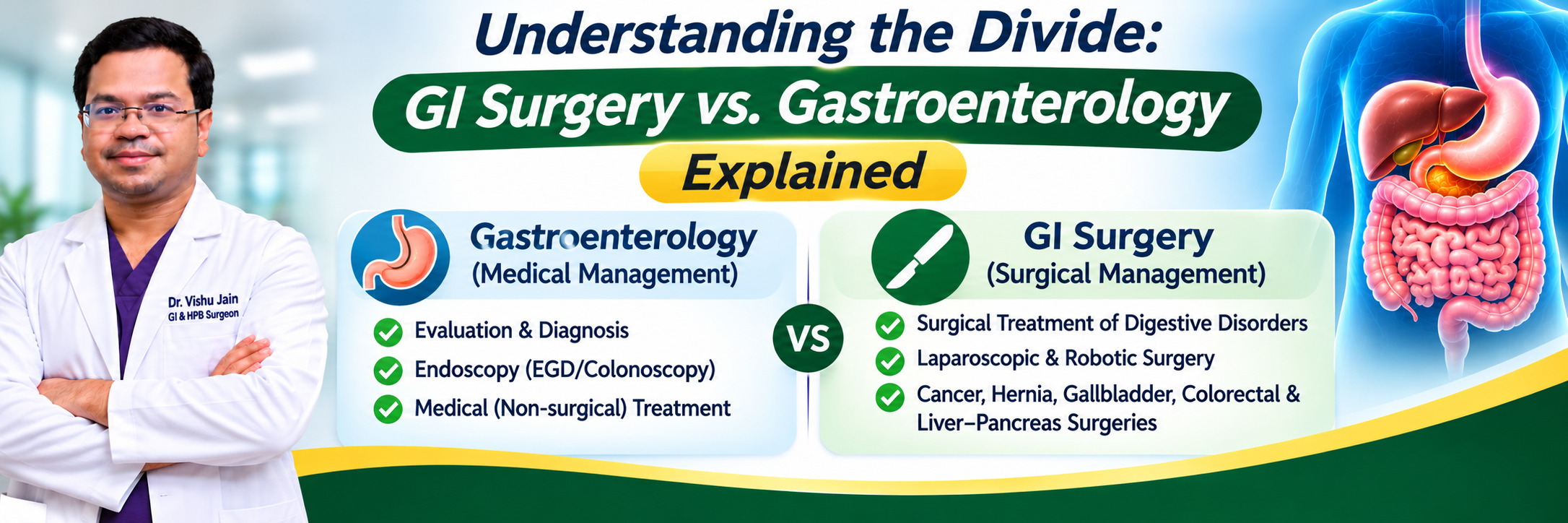
Navigating the world of gastrointestinal (GI) health can sometimes be confusing, especially when it comes to understanding the roles of GI surgeons and gastroenterologists. This article aims to clarify these distinctions to help you make informed decisions about your care.
Myth 1: GI Surgeons and Gastroenterologists Are the Same
A common misconception is that GI surgeons and gastroenterologists are interchangeable. While both specialists focus on the digestive system, their roles are distinct. Gastroenterologists primarily diagnose and manage GI disorders using non-surgical methods. They perform procedures like endoscopies to examine the digestive tract and treat conditions such as GERD, inflammatory bowel disease, and liver disorders.
On the other hand, GI surgeons, like Dr. Vishu Jain, are trained to perform surgical interventions for conditions that require operative management. This includes procedures such as laparoscopic cholecystectomy for gallstones, hernia repairs, and surgeries for colorectal cancer. For instance, if a patient has a complex case of appendicitis that requires removal of the appendix, a GI surgeon would be the specialist to perform the procedure.
Myth 2: Only Surgery Involves GI Issues
Another misconception is that surgery is the only solution for GI problems. In reality, many GI issues are managed non-surgically by gastroenterologists. They offer treatments such as medication, dietary modifications, and lifestyle changes to manage conditions like acid reflux or irritable bowel syndrome.
However, there are times when both specialists collaborate to provide comprehensive care. For example, a patient with severe ulcerative colitis might initially receive medication and dietary advice from a gastroenterologist. If these measures do not suffice, a GI surgeon might be consulted for potential surgical options.
Myth 3: Surgery is Always the First Option
Many believe that surgery is the immediate response to GI issues, but this is not always the case. Treatment protocols are carefully assessed, and conservative management is often prioritized. Non-invasive treatments are considered first, and surgery is usually reserved for cases where other treatments have failed or when the condition is severe.
For instance, in cases of GERD, lifestyle changes and medications are typically tried before considering surgical options like fundoplication. This approach ensures that patients receive the most appropriate care without unnecessary interventions.
Fact: A Holistic Approach to GI Health
Understanding GI health requires a holistic approach. Both GI surgeons and gastroenterologists play crucial roles in managing digestive health, often working together to ensure the best outcomes for patients. This partnership allows for a comprehensive treatment plan that addresses both immediate and long-term health needs.
Dr. Vishu Jain, with his expertise in minimally invasive and robotic surgery, emphasizes the importance of this collaborative approach. By integrating surgical and non-surgical strategies, patients receive well-rounded care that enhances their quality of life.
What to Do: Making Informed Choices
When facing a GI issue, it's essential to understand when to consult a GI surgeon versus a gastroenterologist. If you are experiencing unexplained abdominal pain, persistent digestive issues, or have been diagnosed with a condition that might require surgery, consulting with a GI surgeon like Dr. Jain could be beneficial.
Prepare for your consultation by listing your symptoms, previous treatments, and any questions you might have. This will help you and your specialist determine the most suitable treatment plan.
Additional Resources for Further Understanding
For more information on GI health, consider exploring resources such as the Indian Society of Gastroenterology or the American College of Gastroenterology. Additionally, support groups and community resources can provide valuable insights and support for managing GI conditions.
Staying informed about gastrointestinal issues empowers you to take an active role in your health care. By understanding the roles of GI surgeons and gastroenterologists, you can make confident decisions about your treatment options. To know more, consult a specialist.
Clinic Location & Consultation Information
## Visit Dr. Vishu Jain
Bhopal
Phone: +917838948761
WhatsApp: 7838948761
Email: dr.vishujain@gmail.com
Ready to book an appointment?
Consult with Dr. Vishu Jain.
Book an appointmentMore articles
Understanding Laparoscopic Esophagectomy
Laparoscopic esophagectomy is a minimally invasive surgical procedure used to remove part or all of the esophagus, often due to cancer or severe damage. Th
Read more →Spotting the Signs: When to Consult a Gastroenterologist for Your Health
Learn when to consult a gastroenterologist for persistent acidity, abdominal pain, bloating, blood in stool, jaundice, or unexplained weight loss.
Read more →What Is Laparoscopic Gastrectomy?
Learn what laparoscopic gastrectomy is, how minimally invasive stomach removal surgery is performed, its benefits, risks, and recovery process.
Read more →What is a Liver Transplant?
A liver transplant is a surgical procedure that involves replacing a diseased liver with a healthy one from a donor. This treatment is often recommended fo
Read more →