
Back to ResourcesPancreas
Understanding Pancreatic Tumors: Causes, Symptoms, and Treatment
Health education · AI-assisted
Dr. Vishu Jain•November 16, 2026•11 views
What Are Pancreatic Tumors?
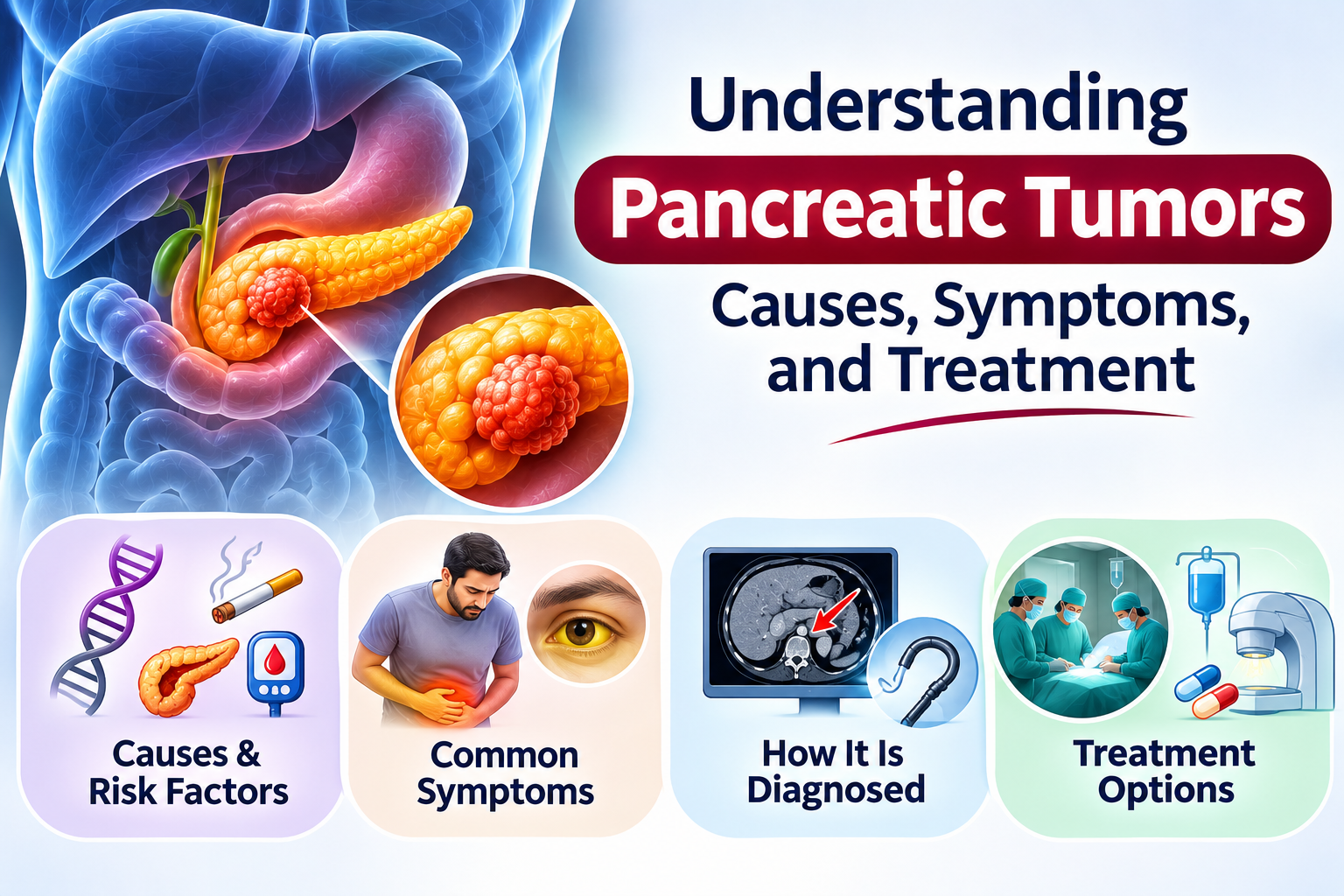
Pancreatic tumors are abnormal growths that occur in the pancreas, an organ located behind the stomach. The pancreas plays a crucial role in digestion and regulating blood sugar. Tumors in the pancreas can be benign or malignant, with the latter being referred to as pancreatic cancer. Early detection and treatment are important to manage the condition effectively.
Causes of Pancreatic Tumors
The exact cause of pancreatic tumors is not fully understood, but certain risk factors have been identified. These include genetic predispositions, smoking, obesity, chronic pancreatitis, and diabetes. Family history of pancreatic cancer and certain hereditary conditions can also increase the risk. Understanding these factors helps in assessing risk and taking preventive measures where possible.
Symptoms of Pancreatic Tumors
Symptoms of pancreatic tumors may vary depending on the tumor's size, location, and whether it is benign or malignant. Common symptoms include abdominal pain, weight loss, jaundice (yellowing of the skin and eyes), and digestive problems. In some cases, symptoms may not appear until the tumor is advanced, making regular check-ups important for those at risk.
When to See a Doctor
It is advisable to consult a healthcare professional if you experience persistent symptoms such as unexplained weight loss, jaundice, or abdominal pain. Early consultation can lead to prompt diagnosis and management, which can be crucial in improving outcomes. Individuals with a family history of pancreatic tumors should discuss screening options with their healthcare provider.
Diagnosing Pancreatic Tumors
Diagnosis of pancreatic tumors typically involves a combination of imaging tests, such as CT scans, MRI, and endoscopic ultrasound, along with blood tests to assess tumor markers. A biopsy may be performed to confirm the nature of the tumor. These diagnostic tools help in determining the appropriate treatment plan.
Treatment Options for Pancreatic Tumors
Treatment for pancreatic tumors depends on the type and stage of the tumor. Surgical options include procedures like the Whipple procedure, distal pancreatectomy, or total pancreatectomy. In some cases, minimally invasive techniques such as laparoscopic surgery are used. Other treatments may include chemotherapy and radiation therapy. A multidisciplinary approach is often employed to tailor the treatment to the patient's needs.
Prevention and Aftercare
While not all pancreatic tumors can be prevented, lifestyle changes can reduce risk. Maintaining a healthy weight, avoiding smoking, and managing conditions like diabetes are important preventive measures. After treatment, regular follow-ups are crucial to monitor for any recurrence and manage any long-term effects of treatment. Supportive care and rehabilitation may also be part of the aftercare process.
Clinic Location & Consultation Information
## Visit Dr. Vishu Jain
Gastrocare Hspital, Main Rd No. 3, near Personal Branch SBI, E-3, Arera Colony, Bhopal, Madhya Pradesh, 462016
Phone: 7838948761
WhatsApp: 7838948761
Email: dr.vishujain@gmail.com
FAQs: Clear Answers for Patients
Q1.What are the common symptoms of pancreatic tumors?
Common symptoms include abdominal pain, weight loss, jaundice, and digestive problems. Symptoms may vary depending on the tumor's characteristics.
Q2.How are pancreatic tumors diagnosed?
Diagnosis involves imaging tests like CT scans and MRI, blood tests for tumor markers, and possibly a biopsy to confirm the nature of the tumor.
Q3.What treatment options are available for pancreatic tumors?
Treatment options include surgical procedures, chemotherapy, and radiation therapy, depending on the type and stage of the tumor.
Q4.Can lifestyle changes help in preventing pancreatic tumors?
Lifestyle changes such as maintaining a healthy weight, avoiding smoking, and managing diabetes can help reduce the risk of pancreatic tumors.
Q5.When should one consult a doctor about pancreatic tumors?
Consult a doctor if you experience persistent symptoms such as unexplained weight loss, jaundice, or abdominal pain, especially if you have risk factors.
Have a question for Dr. Vishu Jain?
Reach out and the clinic will get back to you.
Get in touchMore articles
Understanding Laparoscopic Esophagectomy
Laparoscopic esophagectomy is a minimally invasive surgical procedure used to remove part or all of the esophagus, often due to cancer or severe damage. Th
Read more →Spotting the Signs: When to Consult a Gastroenterologist for Your Health
Learn when to consult a gastroenterologist for persistent acidity, abdominal pain, bloating, blood in stool, jaundice, or unexplained weight loss.
Read more →What Is Laparoscopic Gastrectomy?
Learn what laparoscopic gastrectomy is, how minimally invasive stomach removal surgery is performed, its benefits, risks, and recovery process.
Read more →What is a Liver Transplant?
A liver transplant is a surgical procedure that involves replacing a diseased liver with a healthy one from a donor. This treatment is often recommended fo
Read more →