
Back to ResourcesHernia

Understanding Hernias: Causes, Symptoms, and Treatment Options
Health education · AI-assisted
Dr. Vishu Jain•November 10, 2026•8 views
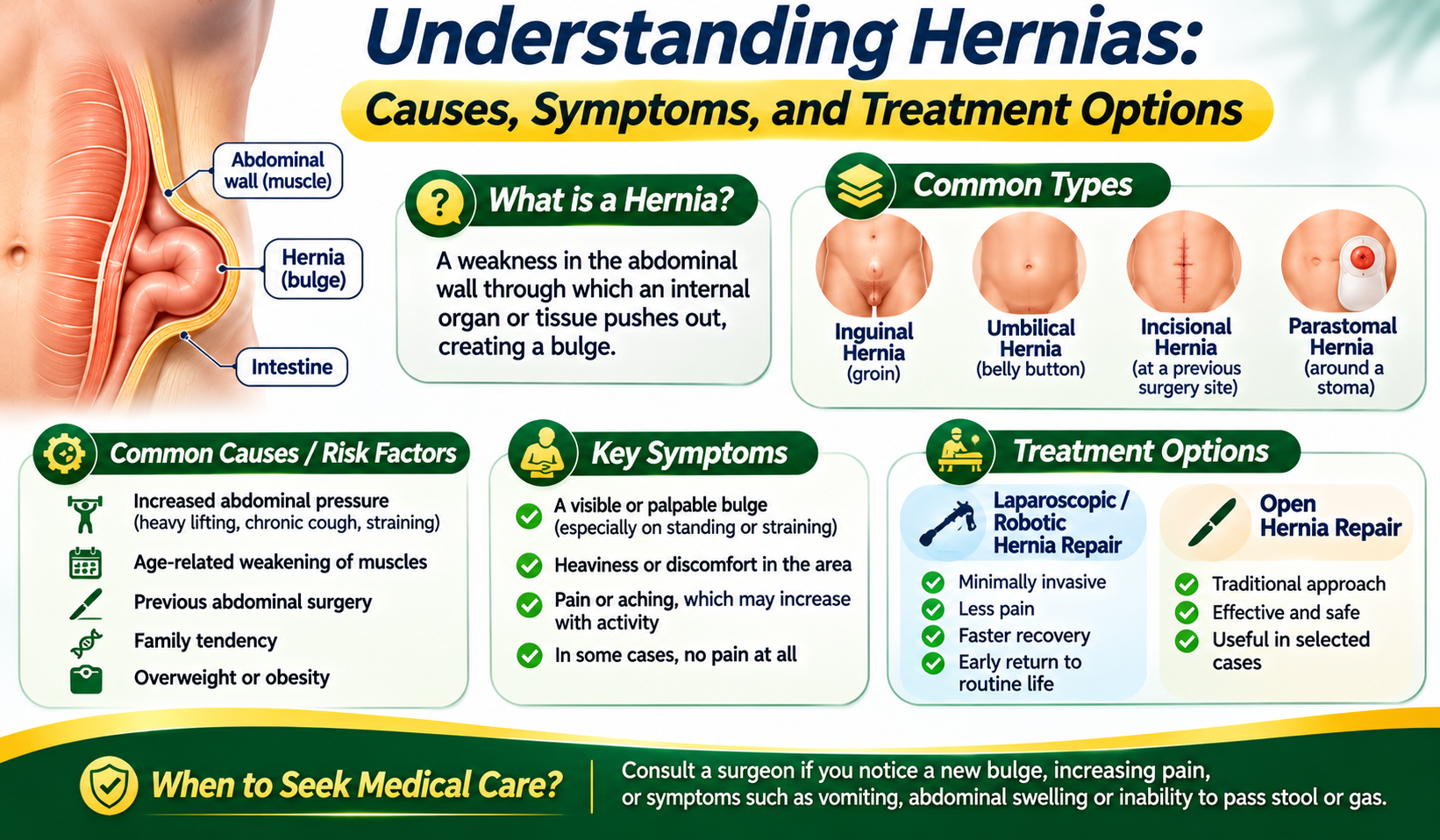
Medical infographic explaining hernia causes, symptoms and treatment options, including inguinal, umbilical, incisional and parastomal hernias, with laparoscopic, robotic and open hernia repair.

What is a Hernia?

A hernia occurs when an internal organ or tissue pushes through a weak spot in the muscle or surrounding tissue wall. This condition commonly affects the abdominal area and can vary in severity. Hernias are often noticeable as a bulge, which may increase in size over time.

Causes of Hernias

Hernias can develop due to a combination of muscle weakness and strain. Factors that contribute to muscle weakness include aging, chronic coughing, or previous surgery. Strain can result from heavy lifting, sudden weight gain, or persistent constipation. Each of these factors can increase the risk of developing a hernia.

Common Symptoms of Hernias

Symptoms of hernias can vary depending on the type and severity. Common signs include a visible bulge in the abdomen or groin, discomfort or pain, especially when bending over or lifting objects, and sensations of pressure or weakness. In some cases, hernias may be asymptomatic and only discovered during a routine medical examination.

When to See a Doctor

It is advisable to consult a doctor if you notice a bulge or experience persistent pain in the abdomen or groin. Immediate medical attention is required if you have severe pain, nausea, vomiting, or if the bulge becomes red or tender, as these could indicate a complication such as a strangulated hernia.

Diagnosis of Hernias

A hernia diagnosis typically involves a physical examination by a healthcare professional. The doctor may ask you to stand and cough to see if the hernia protrudes. Imaging tests such as an ultrasound, CT scan, or MRI might be used to confirm the diagnosis and assess the extent of the hernia.

Treatment Options for Hernias

Treatment for hernias depends on the size and symptoms. In some cases, lifestyle changes and monitoring may suffice. However, surgical intervention is often recommended to repair the hernia and prevent complications. Options include open surgery, laparoscopic surgery, or robotic-assisted surgery, depending on the hernia type and patient needs.

Preventing Hernias and Aftercare

Preventive measures for hernias include maintaining a healthy weight, using proper lifting techniques, avoiding heavy lifting, and managing chronic coughs or constipation. After surgery, following the doctor's recommendations for recovery is crucial to ensure proper healing and to reduce the risk of recurrence.

FAQs: Clear Answers for Patients

Q1.What causes a hernia?

Hernias are caused by a combination of muscle weakness and strain, often due to aging, heavy lifting, or persistent coughing.

Q2.What are the symptoms of a hernia?

Common symptoms include a visible bulge, discomfort or pain, and sensations of pressure or weakness in the affected area.

Q3.How is a hernia diagnosed?

A hernia is diagnosed through a physical examination, and imaging tests like an ultrasound or CT scan may be used for confirmation.

Q4.What treatment options are available for hernias?

Treatment may involve lifestyle changes, monitoring, or surgical repair, including open, laparoscopic, or robotic-assisted surgery.

Q5.How can hernias be prevented?

Preventive measures include maintaining a healthy weight, proper lifting techniques, and managing chronic coughs or constipation.

Have a question for Dr. Vishu Jain?

Reach out and the clinic will get back to you.

Get in touch

Visit us

Our Clinic

Gastrocare Hospital

Main Rd No. 3, near Personal Branch SBI, E-3, Arera Colony, Bhopal, Madhya Pradesh 462016

Mon–Sat: 9:00 am – 8:00 pm

View on Maps

Find us

Our Location

Gastrocare Hospital

Main Rd No. 3, near Personal Branch SBI, E-3, Arera Colony, Bhopal, Madhya Pradesh 462016

Get Directions