What is Gastroesophageal Reflux Disease (GERD)?
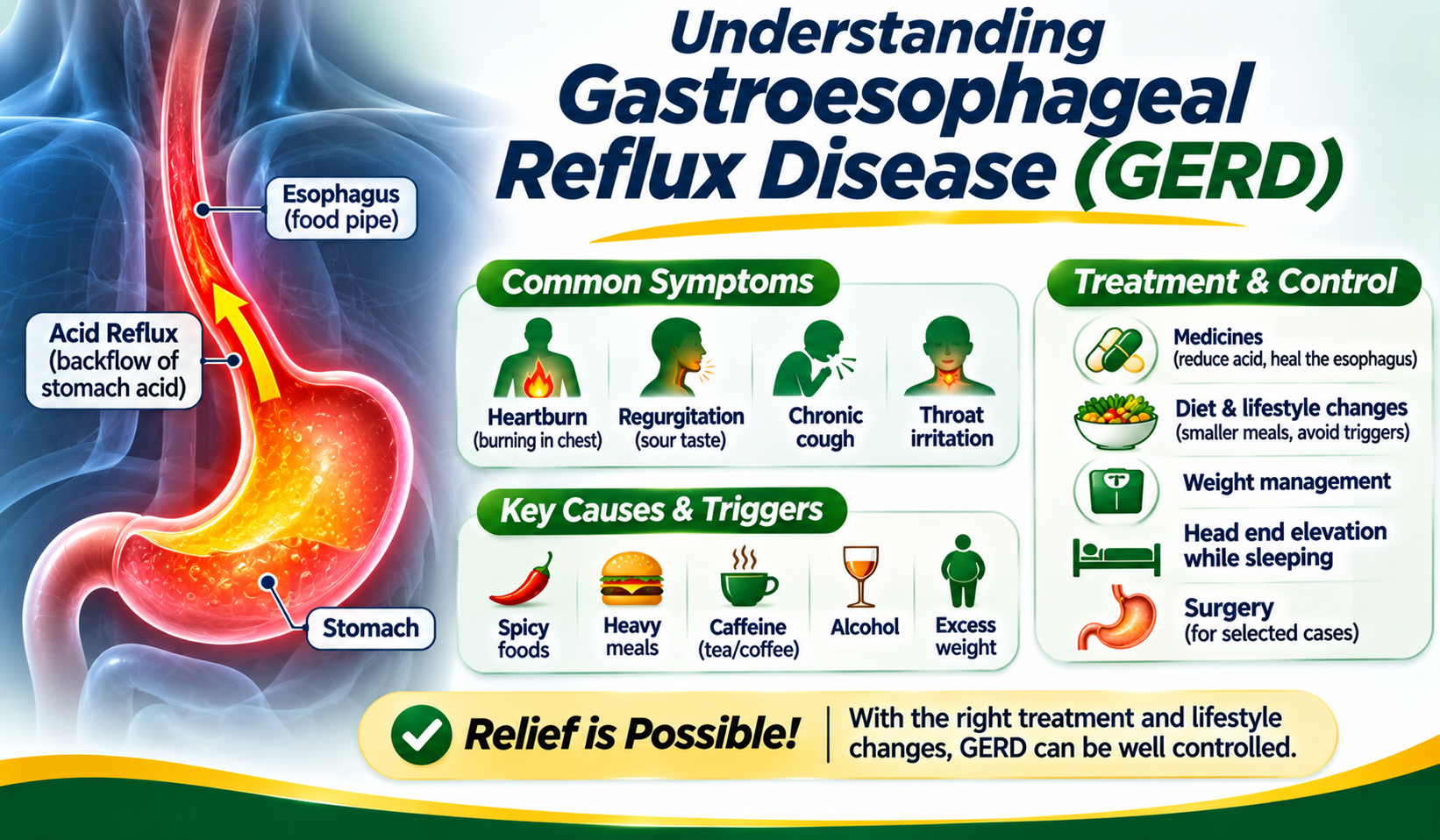
Gastroesophageal Reflux Disease, commonly known as GERD, is a chronic digestive condition where stomach acid frequently flows back into the tube connecting your mouth and stomach (esophagus). This backwash (acid reflux) can irritate the lining of your esophagus. GERD is a common condition that can cause discomfort and may require lifestyle changes or medical treatment to manage.
Causes of GERD
GERD is primarily caused by the malfunctioning of the lower esophageal sphincter (LES), a ring of muscle that acts as a valve between the esophagus and stomach. When the LES doesn't close properly, it allows stomach acid to flow back into the esophagus. Factors contributing to GERD include obesity, pregnancy, smoking, certain medications, and dietary habits such as consuming large meals, or eating late at night.
Symptoms of GERD
The most common symptom of GERD is heartburn, a burning sensation in the chest, often after eating, which might be worse at night. Other symptoms include regurgitation of food or sour liquid, difficulty swallowing, and a sensation of a lump in the throat. Chronic cough, laryngitis, and disrupted sleep can also be associated with GERD.
When to See a Doctor
It is advisable to consult a healthcare professional if you experience severe or frequent symptoms of GERD that do not improve with over-the-counter medications. Long-term GERD can lead to more serious health complications, such as esophagitis, Barrett's esophagus, or esophageal cancer. Seeking medical advice is important for proper diagnosis and management.
Diagnosing GERD
GERD is diagnosed through a combination of symptom assessment and diagnostic tests. A physician may recommend an upper endoscopy to examine the esophagus and stomach, pH monitoring to check for acid in the esophagus, or esophageal manometry to measure the rhythm of muscle contractions in the esophagus. These tests help in confirming the diagnosis and guiding treatment.
Treatment Options for GERD
Treatment for GERD typically involves lifestyle modifications and medications. Lifestyle changes include weight loss, dietary adjustments, and avoiding triggers such as alcohol and tobacco. Medications like antacids, H2 receptor blockers, and proton pump inhibitors are often prescribed to reduce stomach acid. In severe cases, surgical options like laparoscopic Nissen fundoplication may be considered.
Preventing and Managing GERD
Managing GERD involves adhering to lifestyle changes that reduce symptoms. Eating smaller meals, avoiding lying down after eating, elevating the head of the bed, and maintaining a healthy weight can all help. Avoiding foods and drinks that trigger reflux, such as fatty foods, coffee, and alcohol, is also recommended. Regular follow-ups with a healthcare provider ensure effective management of the condition.
FAQs: Clear Answers for Patients
Q1.What lifestyle changes can help manage GERD?
Lifestyle changes such as eating smaller meals, avoiding lying down right after eating, and maintaining a healthy weight can help manage GERD.
Q2.Are there medications available for GERD?
Yes, medications like antacids, H2 blockers, and proton pump inhibitors can help reduce stomach acid and manage GERD symptoms.
Q3.Can GERD lead to more serious health issues?
Untreated GERD can lead to complications like esophagitis, Barrett's esophagus, or even esophageal cancer, making medical consultation important.
Q4.Is surgery an option for treating GERD?
In severe cases where lifestyle changes and medications are ineffective, surgical options like laparoscopic Nissen fundoplication may be considered.
Q5.How is GERD diagnosed?
GERD is diagnosed through symptom assessment and tests such as upper endoscopy, pH monitoring, and esophageal manometry.
Ready to book an appointment?
Consult with Dr. Vishu Jain.
Book an appointment