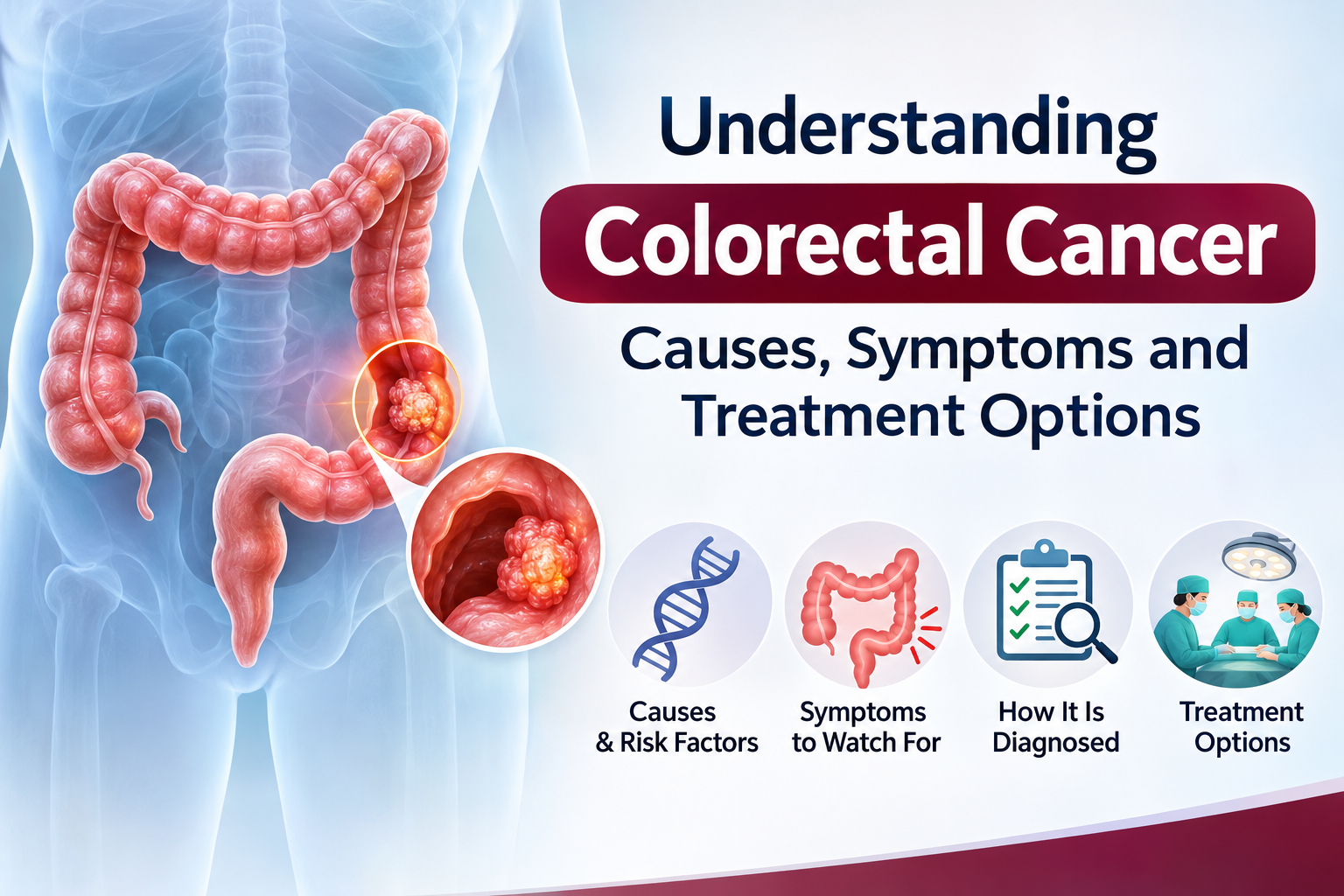
What is Colorectal Cancer?
Colorectal cancer is a type of cancer that begins in the colon or rectum, which are parts of the large intestine. It is often grouped together because they share many characteristics. The disease typically starts as a polyp, a small growth on the inner lining of the colon or rectum, which can develop into cancer over time. Early detection and treatment are crucial for managing colorectal cancer effectively.
Causes of Colorectal Cancer
The exact cause of colorectal cancer is not fully understood, but certain factors can increase the risk. These include age (most cases occur in people over 50), a personal or family history of colorectal cancer or polyps, inflammatory bowel disease, and lifestyle factors such as a diet high in red or processed meats, low physical activity, obesity, smoking, and excessive alcohol consumption. Genetic mutations, such as those seen in familial adenomatous polyposis (FAP) and Lynch syndrome, also play a role.
Symptoms of Colorectal Cancer
Symptoms of colorectal cancer can vary and may include changes in bowel habits (such as diarrhea or constipation), blood in the stool, abdominal discomfort or bloating, unexplained weight loss, and fatigue. These symptoms can also be associated with other conditions, so it is important to consult a healthcare professional for an accurate diagnosis.
When to See a Doctor
It is advisable to see a doctor if you experience persistent symptoms such as changes in bowel habits, blood in the stool, or unexplained weight loss. Early consultation with a healthcare professional can lead to timely diagnosis and treatment, which are crucial for better outcomes. Regular screenings are also recommended for individuals over 50 or those with a family history of colorectal cancer.
Diagnosis of Colorectal Cancer
Diagnosis of colorectal cancer involves a combination of tests and procedures. A colonoscopy is the most common diagnostic tool, allowing doctors to view the inside of the colon and rectum and remove polyps for biopsy. Other tests may include imaging studies such as CT scans, blood tests for tumor markers, and stool tests for hidden blood. These tests help in determining the presence and extent of the disease.
Treatment Options for Colorectal Cancer
Treatment for colorectal cancer depends on the stage and location of the cancer, as well as the patient's overall health. Options include surgery to remove the cancerous section of the colon or rectum, chemotherapy to target cancer cells, radiation therapy, and targeted drug therapy. In some cases, a combination of treatments is used. Discussing with a specialist like Dr. Vishu Jain can help in understanding the most appropriate treatment plan.
Prevention and Aftercare
Preventive measures can significantly reduce the risk of colorectal cancer. These include regular screenings, maintaining a healthy diet rich in fruits, vegetables, and whole grains, regular physical activity, avoiding smoking, and limiting alcohol consumption. Aftercare following treatment involves regular follow-up visits, maintaining a healthy lifestyle, and monitoring for any recurrence of symptoms. Support from healthcare providers and family is essential for recovery and well-being.
FAQs: Clear Answers for Patients
Q1.What are the risk factors for colorectal cancer?
Risk factors include age, family history, certain genetic mutations, a diet high in red meat, low physical activity, obesity, smoking, and alcohol consumption.
Q2.How is colorectal cancer diagnosed?
Diagnosis typically involves a colonoscopy, imaging studies, and possibly stool tests or blood tests to confirm the presence of cancer.
Q3.What are the treatment options for colorectal cancer?
Treatment options include surgery, chemotherapy, radiation therapy, and targeted drug therapy, depending on the cancer stage and patient health.
Q4.Can colorectal cancer be prevented?
While not all cases can be prevented, regular screenings and a healthy lifestyle can significantly reduce the risk of developing colorectal cancer.
Q5.When should I start screening for colorectal cancer?
Screening is generally recommended to start at age 50, but earlier screening may be advised for those with a family history or other risk factors.
Q6.What lifestyle changes can help prevent colorectal cancer?
Adopting a diet rich in fruits and vegetables, regular exercise, avoiding smoking, and limiting alcohol can help reduce the risk.
Have a question for Dr. Vishu Jain?
Reach out and the clinic will get back to you.
Get in touch