
Back to ResourcesAppendix
Understanding Appendicitis: Causes, Symptoms, and Treatment
Health education · AI-assisted
Dr. Vishu Jain•November 10, 2026•8 views
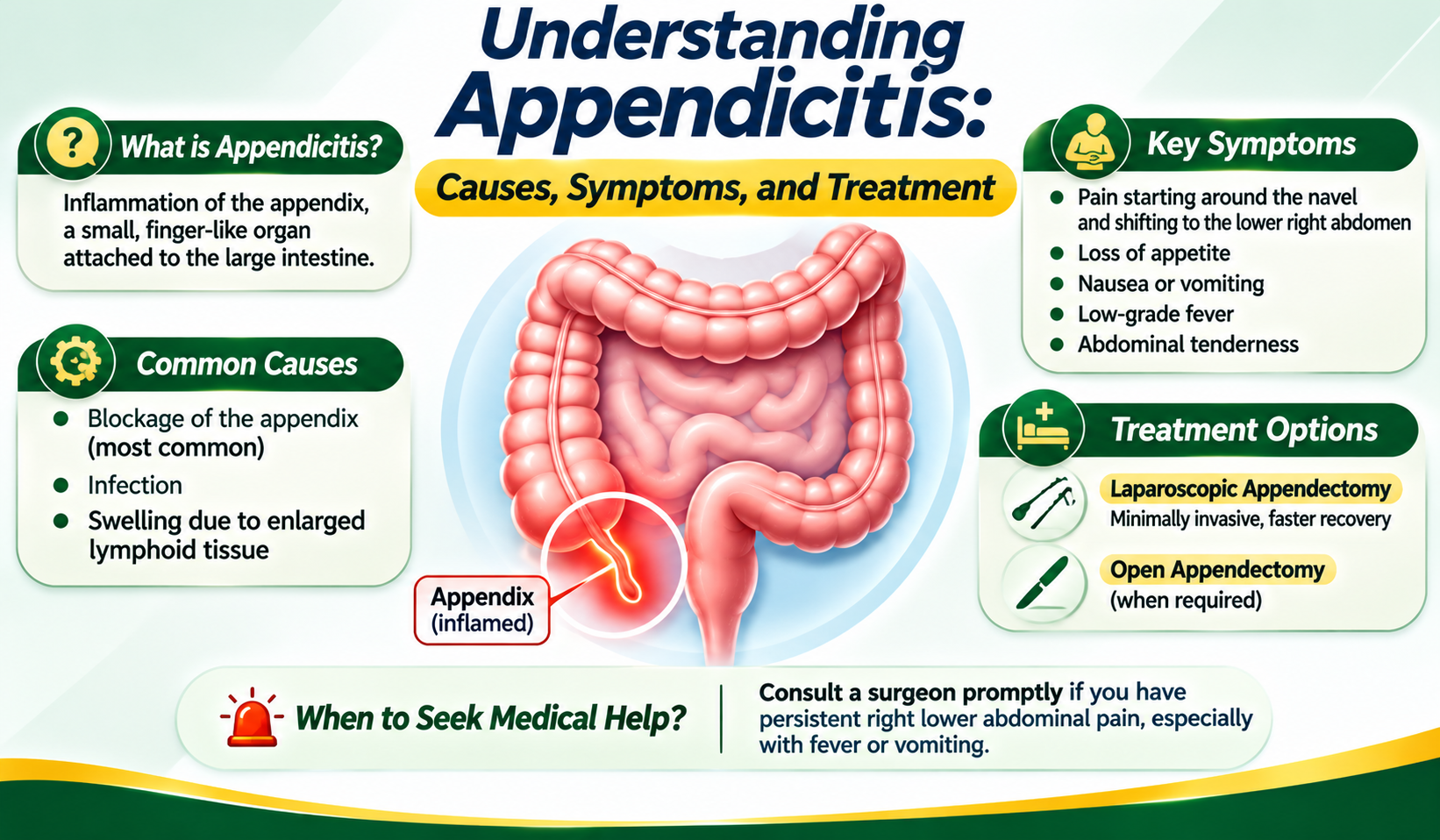
What is Appendicitis?
Appendicitis is an inflammation of the appendix, a small, tube-like organ attached to the large intestine. This condition is considered a medical emergency and typically requires prompt surgical intervention to remove the appendix. The appendix can become swollen and infected, leading to a risk of rupture, which can cause serious complications if not treated in time.
Causes of Appendicitis
The exact cause of appendicitis is not always clear, but it often occurs when the appendix becomes blocked by stool, a foreign body, or cancer. Infection is another common cause, as the appendix can swell in response to an infection in the body. This blockage or infection leads to increased pressure, reduced blood flow, and inflammation, which can eventually cause the appendix to burst if not treated.
Symptoms of Appendicitis
Common symptoms of appendicitis include sudden pain that begins around the navel and often shifts to the lower right abdomen. This pain typically worsens with movement, coughing, or sneezing. Other symptoms may include loss of appetite, nausea, vomiting, fever, and a swollen abdomen. Some patients might experience changes in bowel habits, such as diarrhea or constipation.
When to See a Doctor
It is important to seek medical attention promptly if you experience symptoms suggestive of appendicitis. Early diagnosis and treatment are crucial to prevent complications such as a ruptured appendix, which can lead to peritonitis, a severe abdominal infection. Consulting a healthcare professional ensures timely intervention and reduces the risk of complications.
Diagnosis of Appendicitis
Diagnosing appendicitis typically involves a physical examination to assess abdominal tenderness and pain. Doctors may also order blood tests to check for signs of infection and imaging tests such as an ultrasound or CT scan to visualize the appendix. These diagnostic tools help confirm appendicitis and guide treatment decisions.
Treatment Options for Appendicitis
The primary treatment for appendicitis is surgical removal of the appendix, known as an appendectomy. This can be performed through open surgery or laparoscopic surgery, which is minimally invasive and typically involves shorter recovery times. Antibiotics are also administered before and after surgery to prevent or treat any infection.
Prevention and Aftercare
There is no guaranteed way to prevent appendicitis, but maintaining a diet high in fiber may reduce the risk. After an appendectomy, patients are advised to follow their doctor's instructions regarding wound care and activity restrictions. Gradual return to normal activities is encouraged as recovery progresses. Regular follow-up appointments help ensure proper healing and address any concerns.
Clinic Location & Consultation Information
## Visit Dr. Vishu Jain
Bhopal
Phone: +917838948761
WhatsApp: 7838948761
Email: dr.vishujain@gmail.com
FAQs: Clear Answers for Patients
Q1.What causes appendicitis?
Appendicitis is often caused by a blockage in the appendix, which can result from stool, a foreign body, or infection.
Q2.What are common symptoms of appendicitis?
Symptoms include sudden abdominal pain, loss of appetite, nausea, vomiting, and fever.
Q3.How is appendicitis diagnosed?
Diagnosis involves a physical exam, blood tests, and imaging tests such as an ultrasound or CT scan.
Q4.What is the treatment for appendicitis?
Treatment usually involves an appendectomy, which is the surgical removal of the appendix.
Q5.Can appendicitis be prevented?
While there's no sure way to prevent it, a high-fiber diet may help reduce the risk.
Have a question for Dr. Vishu Jain?
Reach out and the clinic will get back to you.
Get in touchMore articles
Understanding Laparoscopic Esophagectomy
Laparoscopic esophagectomy is a minimally invasive surgical procedure used to remove part or all of the esophagus, often due to cancer or severe damage. Th
Read more →Spotting the Signs: When to Consult a Gastroenterologist for Your Health
Learn when to consult a gastroenterologist for persistent acidity, abdominal pain, bloating, blood in stool, jaundice, or unexplained weight loss.
Read more →What Is Laparoscopic Gastrectomy?
Learn what laparoscopic gastrectomy is, how minimally invasive stomach removal surgery is performed, its benefits, risks, and recovery process.
Read more →What is a Liver Transplant?
A liver transplant is a surgical procedure that involves replacing a diseased liver with a healthy one from a donor. This treatment is often recommended fo
Read more →