
Back to ResourcesLiver
Hepatectomy: Understanding Liver Resection Surgery
Health education · AI-assisted
Dr. Vishu Jain•November 16, 2026•9 views
Hepatectomy: Understanding Liver Resection Surgery
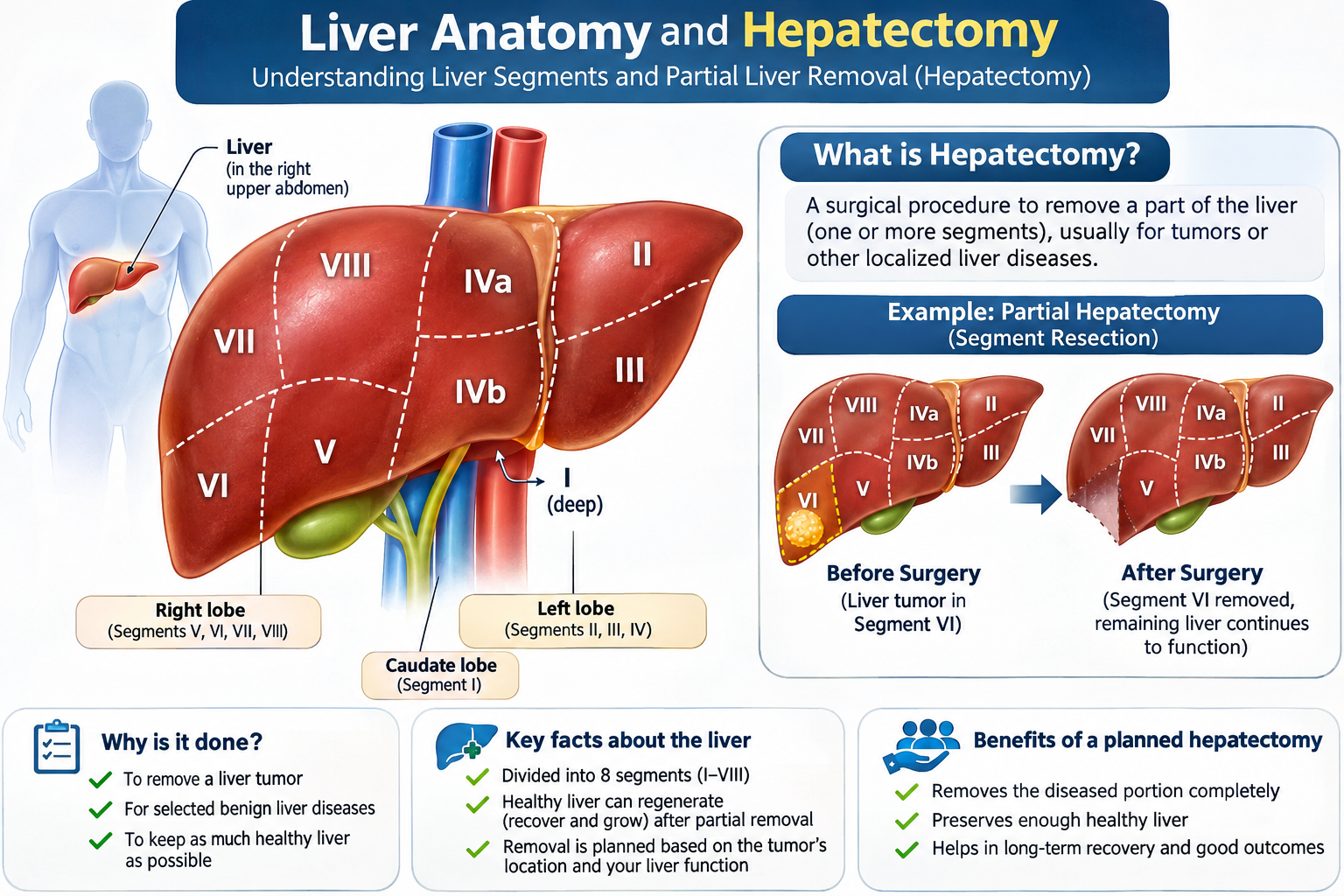
Hepatectomy, commonly referred to as liver resection, is a surgical procedure involving the removal of a portion of the liver. It is often performed to treat liver tumors, both benign and malignant. This article explores the reasons for undergoing a hepatectomy, the procedure itself, and what patients can expect during recovery.
What is Hepatectomy?
Hepatectomy is a surgical operation where a portion of the liver is removed. The liver is a vital organ responsible for numerous functions, including detoxification, protein synthesis, and the production of chemicals necessary for digestion. The liver's unique ability to regenerate allows for partial removal while maintaining its essential functions.
Why is Hepatectomy Used?
Hepatectomy is primarily used to remove liver tumors, which may be cancerous (malignant) or non-cancerous (benign). It is also employed in cases of liver damage due to trauma or disease. By excising the affected portion, the procedure aims to prevent the spread of cancer and alleviate symptoms associated with liver dysfunction.
When is Hepatectomy Recommended?
A hepatectomy is recommended in the following scenarios:
- Liver Cancer: To remove malignant tumors.
- Benign Tumors: When they cause symptoms or complications.
- Metastatic Cancer: To remove cancer that has spread to the liver from other parts of the body.
- Liver Trauma: In cases of injury where part of the liver is damaged.
When is Hepatectomy Not Appropriate?
Hepatectomy may not be suitable for patients with:
- Severe liver dysfunction or cirrhosis.
- Extensive spread of cancer beyond the liver.
- Poor overall health that increases surgical risk.
How Does Hepatectomy Work?
The procedure involves making an incision in the abdomen to access the liver. The surgeon then removes the affected liver segment, ensuring enough healthy tissue remains for normal liver function. Advanced techniques, including laparoscopic and robotic surgery, may be used to minimize recovery time and complications.
What Happens During the Procedure?
- Anesthesia: The patient is placed under general anesthesia.
- Incision: An incision is made to access the liver.
- Resection: The targeted liver section is carefully removed.
- Closure: The incision is closed with sutures or staples.
Preparation for Hepatectomy
Patients may need to undergo several preparatory steps:
- Medical Evaluation: Comprehensive health assessment.
- Imaging Tests: CT or MRI scans to map the liver.
- Preoperative Instructions: Guidelines on fasting and medication adjustments.
Risks and Complications
As with any major surgery, hepatectomy carries risks, including:
- Bleeding
- Infection
- Bile leakage
- Blood clots
- Liver failure
What to Expect After Hepatectomy
Post-surgery, patients can expect:
- Hospital Stay: Typically a few days to a week.
- Pain Management: Medications to alleviate discomfort.
- Gradual Recovery: Resuming normal activities over several weeks.
Outcomes of Hepatectomy
The success of a hepatectomy depends on the underlying condition being treated. Many patients experience improved symptoms and quality of life following the surgery.
Alternatives to Hepatectomy
In certain cases, alternatives such as chemotherapy, radiation therapy, or liver transplantation may be considered based on the patient's condition and overall health.
About Dr. Vishu Jain
Dr. Vishu Jain is a Consultant in GI, HPB, Laparoscopic, and Liver Transplant Surgery with extensive experience in minimally invasive techniques. His calm and reassuring approach ensures patients receive comprehensive care tailored to their needs.
Consultation-Next-Step
For more information or to discuss your options, please consult a specialist.
1. How long does it take to recover from a hepatectomy?
Recovery time varies, but most patients can resume normal activities within 6 to 8 weeks.
2. Can the liver regenerate after hepatectomy?
Yes, the liver has a remarkable ability to regenerate, often returning to near-normal size within a few months.
3. Are there dietary restrictions after the surgery?
Patients may need to follow a special diet initially, gradually returning to a normal diet as advised by their healthcare provider.
4. What follow-up care is required?
Regular follow-up appointments are essential to monitor liver function and overall health.
5. Is hepatectomy a common procedure?
Hepatectomy is a specialized procedure performed by experienced surgeons in cases where liver resection is necessary.
Visit Dr. Vishu Jain
Main Rd No. 3, near Personal Branch SBI, E-3, Arera Colony, Bhopal, Madhya Pradesh, 462016
Phone: 7838948761
WhatsApp: 7838948761
Email: dr.vishujain@gmail.com
Clinic Location & Consultation Information
## Visit Dr. Vishu Jain
Gastrocare Hospital, Main Rd No. 3, near Personal Branch SBI, E-3, Arera Colony, Bhopal, Madhya Pradesh, 462016
Phone: 7838948761
WhatsApp: 7838948761
Email: dr.vishujain@gmail.com
Have a question for Dr. Vishu Jain?
Reach out and the clinic will get back to you.
Get in touchMore articles
Understanding Laparoscopic Esophagectomy
Laparoscopic esophagectomy is a minimally invasive surgical procedure used to remove part or all of the esophagus, often due to cancer or severe damage. Th
Read more →Spotting the Signs: When to Consult a Gastroenterologist for Your Health
Learn when to consult a gastroenterologist for persistent acidity, abdominal pain, bloating, blood in stool, jaundice, or unexplained weight loss.
Read more →What Is Laparoscopic Gastrectomy?
Learn what laparoscopic gastrectomy is, how minimally invasive stomach removal surgery is performed, its benefits, risks, and recovery process.
Read more →What is a Liver Transplant?
A liver transplant is a surgical procedure that involves replacing a diseased liver with a healthy one from a donor. This treatment is often recommended fo
Read more →