
Back to ResourcesColorectal
Colectomy: Understanding the Procedure and Its Importance
Health education · AI-assisted
Dr. Vishu Jain•November 14, 2026•5 views
Introduction
A colectomy is a surgical procedure that involves the removal of all or part of the colon, also known as the large intestine. This procedure is often necessary for patients suffering from conditions that affect the colon's normal function, such as colorectal cancer, inflammatory bowel disease, or diverticulitis. This page will provide a comprehensive understanding of colectomy, its indications, the procedure itself, and what patients can expect during recovery.
What is a Colectomy?
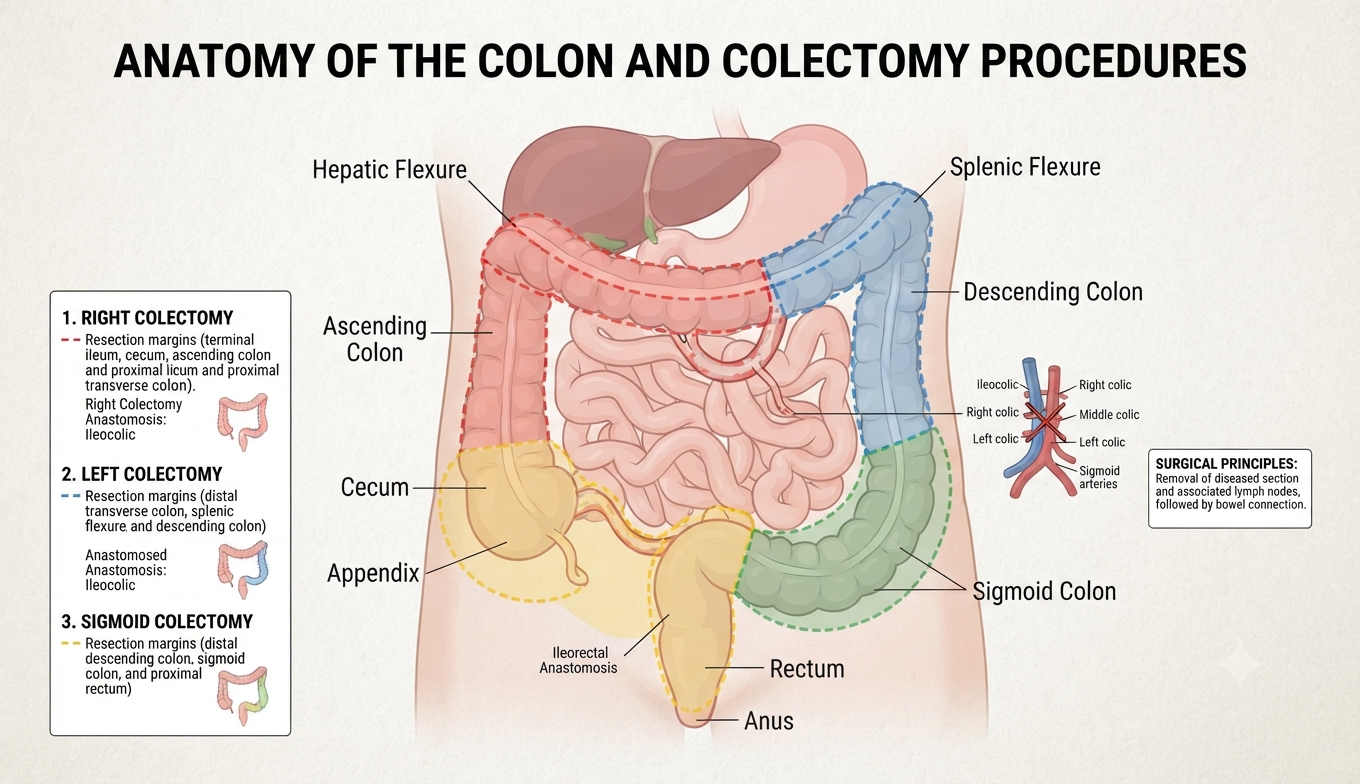
A colectomy involves the surgical removal of a portion or the entirety of the colon. Depending on the condition being treated, the procedure can be categorized as a partial colectomy (removal of part of the colon) or a total colectomy (removal of the entire colon). The procedure aims to alleviate symptoms, prevent complications, or treat cancerous growths.
Why is Colectomy Used?
Colectomy is primarily used to treat conditions that severely impact the colon's health and function. These conditions include:
- Colorectal Cancer: Removal of cancerous sections of the colon.
- Inflammatory Bowel Disease (IBD): Such as Crohn's disease or ulcerative colitis, where removing the affected colon can alleviate symptoms.
- Diverticulitis: When pockets in the colon wall become inflamed or infected.
- Blockages or Obstructions: Caused by scar tissue or tumors.
When is Colectomy Recommended?
A colectomy is recommended when non-surgical treatments have failed to manage the symptoms of the condition, or when there is a risk of severe complications, such as bowel perforation or cancer spread. The decision to undergo a colectomy is based on a thorough evaluation of the patient's condition, overall health, and treatment goals.
When is Colectomy Not Appropriate?
Colectomy may not be suitable for patients who have significant health issues that increase surgical risks or for those whose condition can be effectively managed with less invasive treatments. A detailed assessment by a healthcare provider is essential to determine the appropriateness of the procedure.
How Does Colectomy Work?
The procedure can be performed using traditional open surgery or minimally invasive techniques such as laparoscopic or robotic surgery. The choice of method depends on the specific case and the surgeon's expertise. During the surgery, the affected part of the colon is removed, and the remaining sections are reconnected to maintain digestive function.
What Happens During the Procedure?
- Anesthesia: The patient is put under general anesthesia.
- Incision: An incision is made in the abdomen to access the colon.
- Removal: The diseased section of the colon is removed.
- Reconnection: The healthy ends of the colon are reconnected (anastomosis).
- Closure: The incision is closed with sutures or staples.
Preparation for Colectomy
Patients are usually advised to follow specific instructions before the surgery, which may include dietary changes, bowel preparation, and medication adjustments. It is crucial to follow these guidelines to minimize complications and ensure a smooth procedure.
Risks and Complications
As with any surgery, colectomy carries potential risks, including:
- Infection
- Bleeding
- Anastomotic Leak: Leakage where the colon is reconnected.
- Bowel Obstruction: Due to scar tissue formation.
What to Expect After the Procedure
Post-surgery, patients may experience some discomfort and will need to follow a specific recovery plan. Hospital stays can range from a few days to a week, depending on the surgery type and individual recovery. Follow-up appointments are essential to monitor healing and address any concerns.
Outcomes of Colectomy
The success of a colectomy largely depends on the underlying condition being treated and the patient's overall health. Many patients experience significant relief from symptoms and an improved quality of life post-surgery.
Alternatives to Colectomy
In some cases, non-surgical treatments such as medication or lifestyle changes may be effective alternatives. However, these are typically considered when surgery poses significant risks or when the condition can be managed without surgical intervention.
About Dr. Vishu Jain
Dr. Vishu Jain is a Consultant in GI, HPB, Laparoscopic, and Liver transplant surgery with extensive expertise in minimally invasive and robotic surgery. His calm and reassuring approach ensures that patients receive comprehensive care tailored to their needs.
Consultation and Next Steps
If you are considering a colectomy or need more information about the procedure, consulting a specialist like Dr. Vishu Jain can provide valuable insights and personalized advice.
Clinic Location & Consultation Information
## Visit Dr. Vishu Jain
Gastrocare Hospital, Main Rd No. 3, near Personal Branch SBI, E-3, Arera Colony, Bhopal, Madhya Pradesh, 462016
Phone: 7838948761
WhatsApp: 7838948761
Email: dr.vishujain@gmail.com
FAQs: Clear Answers for Patients
Q1.What is the recovery time after a colectomy?
Recovery time varies, but most patients can return to normal activities within 4 to 6 weeks.
Q2.Will I need a colostomy bag after a colectomy?
Not all patients require a colostomy bag. The need depends on the extent of the surgery and the specific condition being treated.
Q3.How do I prepare for a colectomy?
Preparation includes dietary changes, bowel preparation, and following specific instructions from your healthcare provider.
Q4.Are there dietary restrictions after surgery?
Initially, a liquid or soft diet is recommended, gradually transitioning to regular foods as tolerated.
Q5.What are the signs of complications post-surgery?
Watch for signs of infection, severe pain, or changes in bowel habits, and contact your healthcare provider if these occur.
More health resources
Read more articles from Dr. Vishu Jain.
Read relevant articlesMore articles
Understanding Laparoscopic Esophagectomy
Laparoscopic esophagectomy is a minimally invasive surgical procedure used to remove part or all of the esophagus, often due to cancer or severe damage. Th
Read more →Spotting the Signs: When to Consult a Gastroenterologist for Your Health
Learn when to consult a gastroenterologist for persistent acidity, abdominal pain, bloating, blood in stool, jaundice, or unexplained weight loss.
Read more →What Is Laparoscopic Gastrectomy?
Learn what laparoscopic gastrectomy is, how minimally invasive stomach removal surgery is performed, its benefits, risks, and recovery process.
Read more →What is a Liver Transplant?
A liver transplant is a surgical procedure that involves replacing a diseased liver with a healthy one from a donor. This treatment is often recommended fo
Read more →