
Back to ResourcesGastrointestinal (Gi) Surgery
What Is Open Hernia Repair?
Health education · AI-assisted
Dr. Vishu Jain•October 14, 2026•0 views
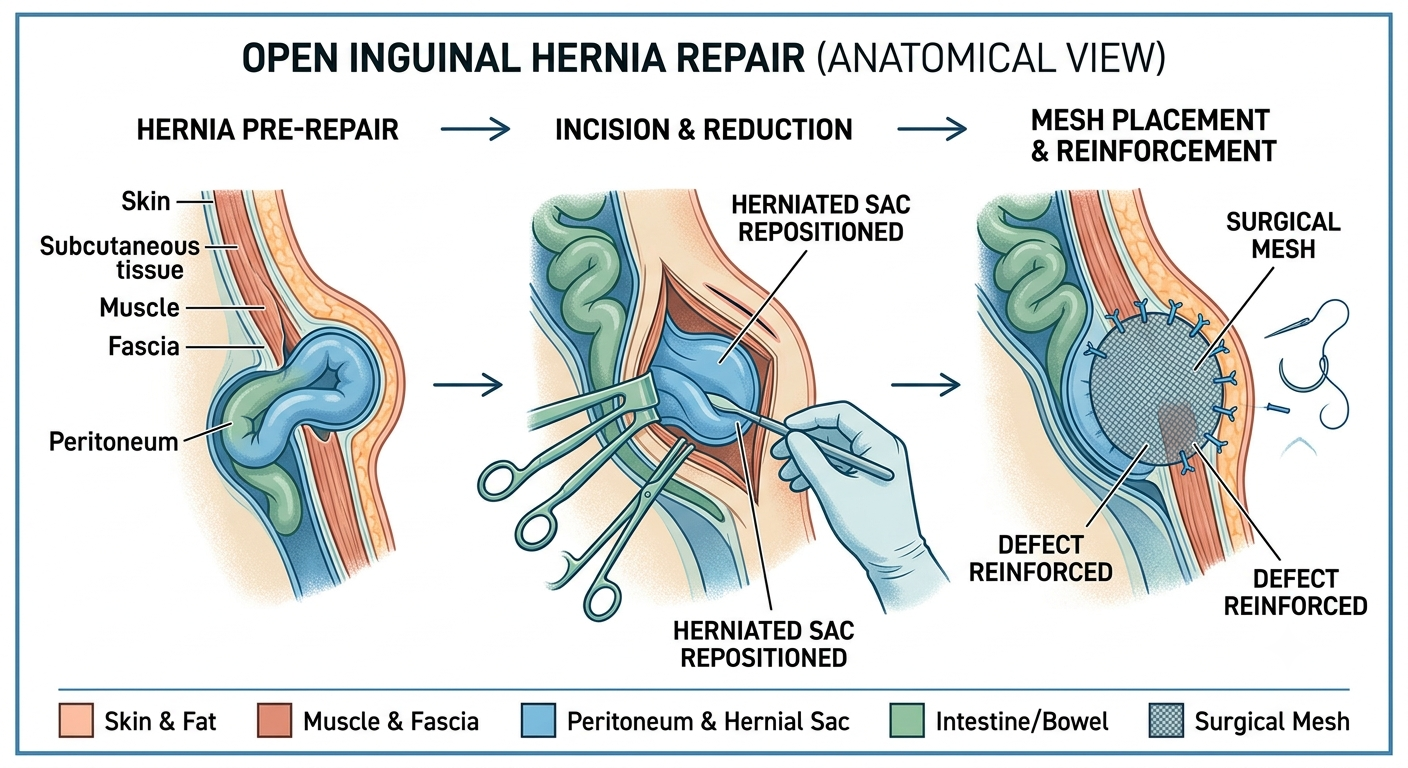
Open Hernia Repair: Understanding the Procedure### Introduction
Open hernia repair is a surgical procedure used to correct hernias, which occur when an internal organ or tissue protrudes through a weak spot in the abdominal wall. This comprehensive guide will walk you through the essentials of open hernia repair, including its purpose, procedure, and recovery process.
Open hernia repair is a traditional surgical method for repairing hernias. It involves making an incision directly over the hernia site to push the protruding tissue back into place and reinforce the weakened area with stitches or a mesh.
Why Is Open Hernia Repair Used?
This procedure is chosen for its effectiveness in treating various types of hernias, such as inguinal, femoral, umbilical, and incisional hernias. It is particularly beneficial when laparoscopic surgery is not suitable, such as in cases where the hernia is large or recurrent.
When Is Open Hernia Repair Recommended?
Open hernia repair is recommended when:
- The hernia is causing pain or discomfort.
- There is a risk of complications, such as strangulation or obstruction.
- The hernia is large or has recurred after previous repair attempts.
When Is Open Hernia Repair Not Appropriate?
This procedure may not be suitable for patients with:
- Severe medical conditions that increase surgical risks.
- Previous extensive abdominal surgeries that complicate access to the hernia site.
How Does Open Hernia Repair Work?
During open hernia repair, the surgeon makes an incision over the hernia, pushes the protruding tissue back into place, and strengthens the abdominal wall using stitches or a synthetic mesh. This mesh acts as a supportive barrier, reducing the risk of recurrence.
What Happens During the Procedure?
1. Anesthesia: The patient is given general or local anesthesia.
2. Incision: A cut is made over the hernia site.
3. Repair: The herniated tissue is repositioned, and the area is reinforced.
4. Closure: The incision is closed with sutures, staples, or surgical glue.
Preparation for Open Hernia Repair
Before the procedure, patients should:
- Discuss any medications with their doctor.
- Arrange for someone to drive them home post-surgery.
- Follow pre-surgery fasting instructions.
Risks and Complications
As with any surgery, open hernia repair carries risks, including:
- Infection
- Bleeding
- Recurrence of the hernia
- Nerve damage
What to Expect After the Procedure
Post-surgery, patients can expect:
- A recovery period of several weeks.
- Mild pain and swelling at the incision site.
- Restrictions on heavy lifting and strenuous activities.
Expected Outcomes
Open hernia repair generally provides relief from hernia symptoms and reduces the risk of complications. Most patients experience a significant improvement in their quality of life post-surgery.
Alternatives to Open Hernia Repair
Alternatives include:
- Laparoscopic hernia repair
- Watchful waiting for asymptomatic hernias
About Dr. Vishu Jain
Dr. Vishu Jain is a Consultant in GI, HPB, Laparoscopic, and Liver Transplant Surgery. With a decade of experience, he specializes in minimally invasive procedures to enhance patient outcomes.
Consultation and Next Steps
If you suspect a hernia or have been advised to undergo hernia repair, consult a specialist to discuss the most suitable treatment options.
1. How long does recovery take?
Recovery typically takes a few weeks, but this can vary based on the individual's health and the hernia's complexity.
2. Is open hernia repair painful?
Some discomfort is expected post-surgery, but pain management strategies will be in place.
3. Can hernias recur after open repair?
While the risk is reduced, there is still a possibility of recurrence.
4. What activities should be avoided after surgery?
Avoid heavy lifting and strenuous activities until your doctor advises otherwise.
5. Are there any long-term complications?
Long-term complications are rare, but include chronic pain or recurrence.