
Back to ResourcesGastrointestinal (Gi) Surgery
Laparoscopic Hernia Repair: A Comprehensive Guide
Dr. Vishu Jain•October 6, 2026•11 views
Introduction
Laparoscopic hernia repair is a minimally invasive surgical technique used to treat hernias. This procedure involves the use of small incisions and specialized instruments to repair the weakened area in the abdominal wall. This article provides a detailed overview of laparoscopic hernia repair, including its purpose, process, and what patients can expect before, during, and after the surgery.
What is Laparoscopic Hernia Repair?
Laparoscopic hernia repair is a surgical procedure aimed at fixing hernias using a laparoscope—a thin, flexible tube with a camera and light. The camera projects images onto a screen, allowing the surgeon to see inside the abdomen and repair the hernia with precision. This technique is less invasive than traditional open surgery, leading to quicker recovery times and less postoperative pain.
Why is Laparoscopic Hernia Repair Used?
This procedure is commonly used to treat various types of hernias, including inguinal, umbilical, and incisional hernias. It is preferred due to its minimally invasive nature, which results in smaller scars, reduced pain, and faster recovery compared to open surgery. Patients with recurrent hernias or those who have had previous abdominal surgeries may also benefit from this approach.
When is Laparoscopic Hernia Repair Recommended?
Laparoscopic hernia repair is recommended for patients experiencing symptoms such as pain, discomfort, or a noticeable bulge in the abdomen or groin. It is also advised for those whose hernias interfere with daily activities or pose a risk of complications like strangulation, where the blood supply to the herniated tissue is cut off.
When is Laparoscopic Hernia Repair Not Appropriate?
This procedure may not be suitable for patients with certain medical conditions, such as severe heart or lung disease, or those who cannot tolerate general anesthesia. Additionally, very large hernias or those with significant scarring from previous surgeries might require an open surgical approach.
How Does Laparoscopic Hernia Repair Work?
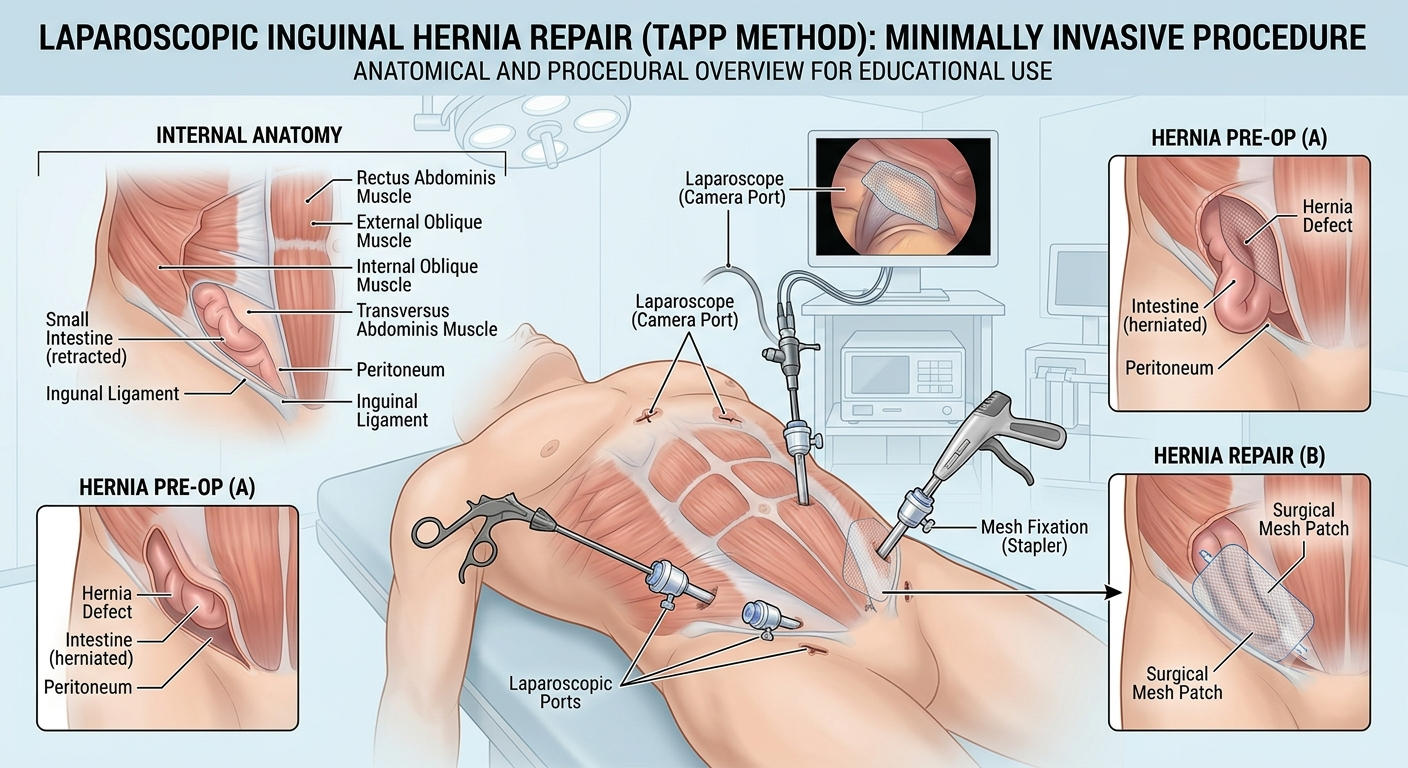
During the procedure, the surgeon makes several small incisions in the abdomen. A laparoscope is inserted through one incision, while other instruments are used through the remaining incisions to repair the hernia. The surgeon places a mesh over the weakened area to strengthen it and prevent recurrence.
What Happens During the Procedure?
The surgery is performed under general anesthesia. After making the incisions, the surgeon inflates the abdomen with carbon dioxide gas to create space for viewing and working. The hernia is then carefully repaired, and the mesh is positioned securely. The incisions are closed with sutures or surgical glue.
Preparation for Laparoscopic Hernia Repair
Patients are advised to avoid eating or drinking for several hours before the surgery. They should also inform the surgical team about any medications they are taking, as some may need to be paused. Preoperative tests, such as blood work and imaging, may be conducted to ensure the patient is fit for surgery.
Risks and Complications
While laparoscopic hernia repair is generally safe, potential risks include infection, bleeding, and injury to surrounding organs. There is also a small risk of hernia recurrence. Patients should discuss these risks with their surgeon and follow postoperative care instructions to minimize complications.
What to Expect After Surgery
Recovery from laparoscopic hernia repair is typically quick. Most patients can return to normal activities within a week, although strenuous exercise should be avoided for a few weeks. Pain and discomfort are usually mild and can be managed with over-the-counter pain relievers.
Outcomes of Laparoscopic Hernia Repair
The outcomes of this procedure are generally positive, with most patients experiencing relief from hernia symptoms and a low rate of recurrence. The minimally invasive nature of the surgery contributes to faster healing and less postoperative scarring.
Alternatives to Laparoscopic Hernia Repair
In some cases, open hernia repair may be recommended, especially if the hernia is large or complex. Non-surgical options, such as wearing a supportive truss, may provide temporary relief but do not address the underlying issue.
About Dr. Vishu Jain
Dr. Vishu Jain is a Consultant in GI, HPB, Laparoscopic, and Liver Transplant Surgery. With extensive experience in minimally invasive techniques, Dr. Jain is dedicated to providing effective and compassionate care to patients with hernias and other gastrointestinal conditions.
Consultation and Next Steps
If you suspect you have a hernia or have been experiencing related symptoms, consider consulting a specialist. Dr. Vishu Jain offers comprehensive evaluations and personalized treatment plans to address your specific needs.
FAQs: Clear Answers for Patients
Q1.What is the recovery time for laparoscopic hernia repair?
Most patients can resume normal activities within a week, but full recovery may take a few weeks.
Q2.Is laparoscopic hernia repair painful?
Pain is usually mild and manageable with medication. Most patients report less pain compared to open surgery.
Q3.Can hernias recur after laparoscopic repair?
While recurrence is possible, it is less common with laparoscopic repair compared to traditional methods.
Q4.Will I have visible scars after the surgery?
The incisions are small, resulting in minimal scarring that fades over time.
Q5.How soon can I return to work after the procedure?
Many patients return to work within a week, depending on the nature of their job and recovery progress.
Ready to book an appointment?
Consult with Dr. Vishu Jain.
Book an appointment