Back to ResourcesGastrointestinal (Gi) Surgery
Introduction
Health education · AI-assisted
Dr. Vishu Jain•October 24, 2026•0 views
Robotic Fundoplication: A Comprehensive Guide
Robotic Fundoplication is a minimally invasive surgical procedure used to treat gastroesophageal reflux disease (GERD) and other related conditions. This procedure involves the use of robotic technology to enhance precision and control, offering a modern solution for patients seeking relief from chronic acid reflux symptoms.
What Is Robotic Fundoplication?
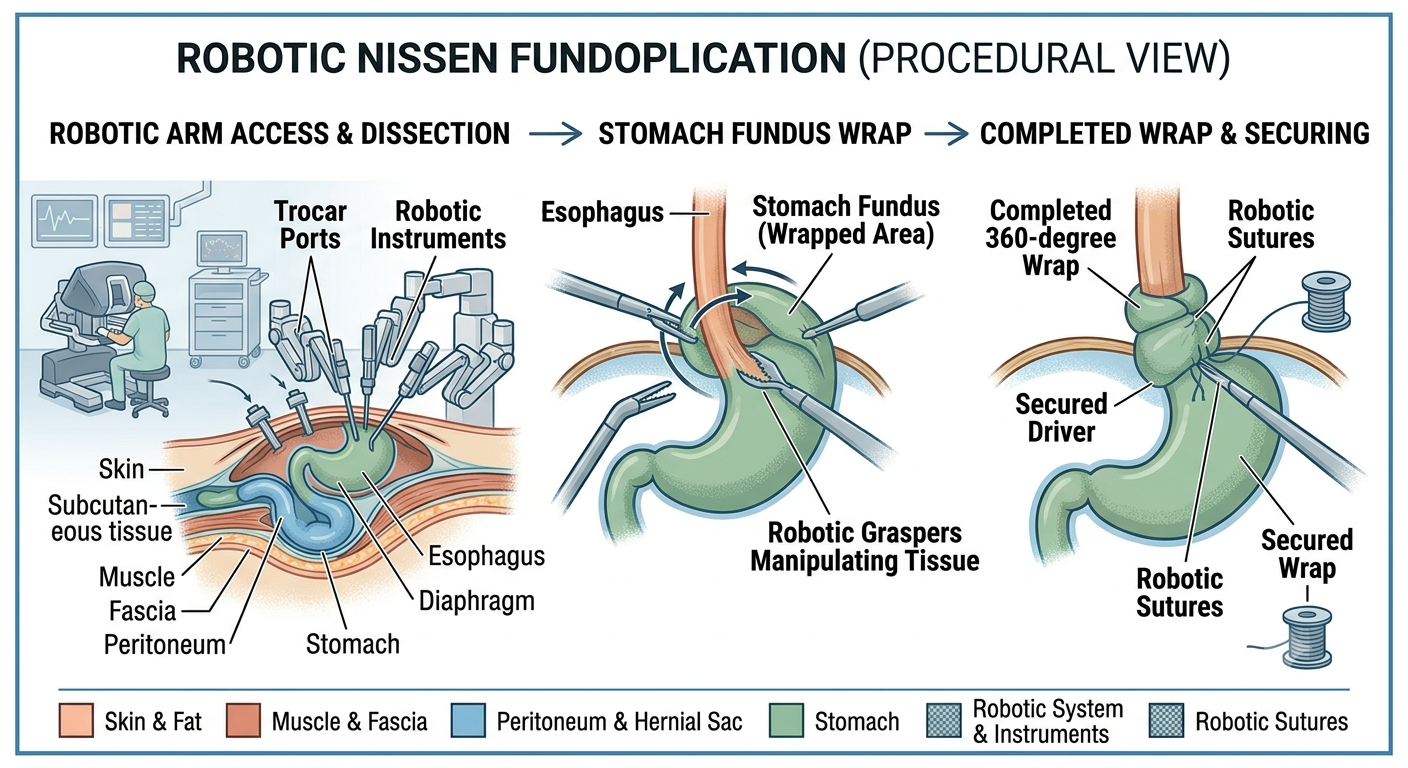
Robotic Fundoplication is a type of laparoscopic surgery where a robotic system assists the surgeon in wrapping the upper part of the stomach around the lower esophagus. This creates a new valve mechanism, preventing acid reflux. The robotic system provides a three-dimensional view and precise movements, minimizing the risk of complications.
Why Is Robotic Fundoplication Used?
This procedure is primarily used to treat GERD, a condition where stomach acid frequently flows back into the esophagus, causing irritation. It is also used for patients with hiatal hernias and those who do not respond well to medication. The robotic approach offers enhanced dexterity and visualization, which can improve surgical outcomes.
When Is Robotic Fundoplication Recommended?
Robotic Fundoplication is recommended for patients who have persistent GERD symptoms despite medical therapy, those with severe esophagitis, or those with a significant hiatal hernia. It is also considered for patients who prefer a long-term solution over lifelong medication.
When Is Robotic Fundoplication Not Appropriate?
This procedure may not be suitable for patients with severe esophageal motility disorders, certain anatomical abnormalities, or those with significant comorbid conditions that increase surgical risk. A thorough evaluation by a specialist is necessary to determine eligibility.
How Does Robotic Fundoplication Work?
During the procedure, small incisions are made in the abdomen. The robotic arms, controlled by the surgeon, perform the surgery with high precision. The upper stomach is wrapped around the esophagus and secured with sutures, creating a barrier to acid reflux.
What Happens During the Procedure?
The patient is placed under general anesthesia. The surgeon makes several small incisions and inserts the robotic instruments. The procedure typically lasts 2-3 hours. The robotic system provides a magnified view, allowing the surgeon to perform the surgery with great accuracy.
Preparation for Robotic Fundoplication
Patients are advised to avoid eating or drinking several hours before the surgery. Preoperative tests, including blood tests and imaging studies, may be required. Patients should discuss their medications with their doctor, as some may need to be adjusted or stopped before surgery.
Risks and Complications
As with any surgery, there are risks involved. Potential complications include bleeding, infection, or adverse reactions to anesthesia. Specific to fundoplication, there might be difficulty swallowing or gas bloat syndrome. The robotic approach aims to minimize these risks through enhanced precision.
What to Expect After the Procedure
Recovery from robotic fundoplication is generally quicker than traditional surgery. Patients can expect to stay in the hospital for 1-2 days. Most can return to normal activities within a few weeks. A post-operative diet plan will be provided to aid recovery.
Outcomes of Robotic Fundoplication
Robotic Fundoplication has shown to effectively reduce GERD symptoms in many patients. The procedure aims to improve quality of life by eliminating the need for long-term medication. However, individual outcomes may vary.
Alternatives to Robotic Fundoplication
Alternatives include traditional laparoscopic fundoplication, medication management, or lifestyle modifications. Each option has its benefits and limitations, and the choice depends on the patient's specific condition and preferences.
About Dr. Vishu Jain
Dr. Vishu Jain is a Consultant in GI, HPB, Laparoscopic, and Liver Transplant Surgery with over 10 years of experience. He specializes in minimally invasive and robotic surgeries, enhancing patient outcomes in gastrointestinal procedures.
Consultation and Next Steps
If you are experiencing persistent GERD symptoms, consider consulting a specialist to discuss your options. Robotic Fundoplication may provide the relief you need.
1. How long does the robotic fundoplication procedure take?
The procedure typically lasts between 2-3 hours, depending on the complexity of the case.
2. Is robotic fundoplication covered by insurance?
Coverage varies by insurance provider and plan. It's advisable to check with your insurance company regarding coverage for this procedure.
3. What is the recovery time after robotic fundoplication?
Most patients can return to normal activities within a few weeks, with a hospital stay of 1-2 days.
4. Are there dietary restrictions after the surgery?
Yes, patients are usually given a specific diet plan to follow post-surgery to aid in recovery.
5. Can robotic fundoplication be performed on children?
This procedure is generally performed on adults. Pediatric cases require a specialized evaluation.
More health resources
Read more articles from Dr. Vishu Jain.
Read relevant articles